
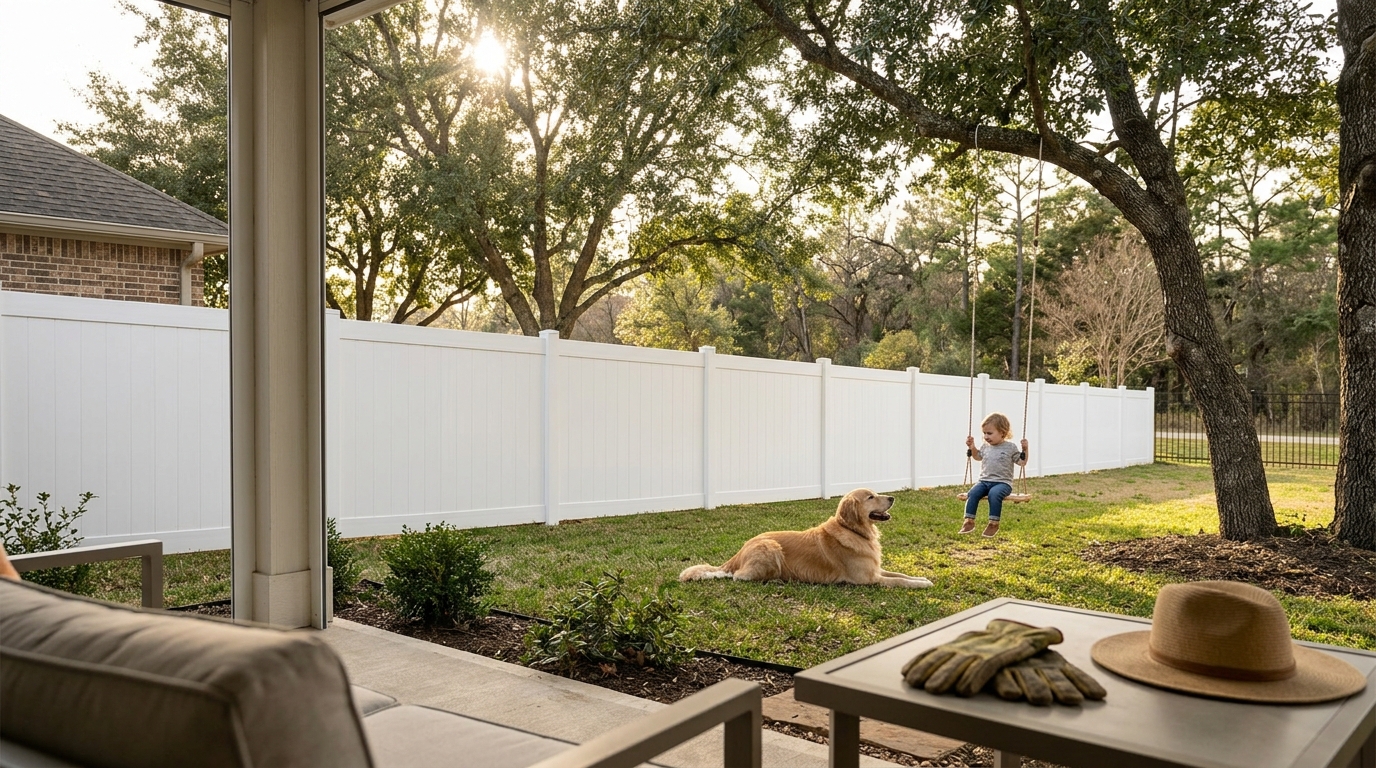
If you are planning a new fence for your home in Brazoria County, Matagorda County, or Fort Bend County, vinyl fencing deserves a serious look. Known for its durability, minimal upkeep, and clean aesthetic, vinyl has surged in popularity among Texas homeowners who want a beautiful boundary without the constant maintenance wood demands. At Superior Fences, we install top-quality vinyl fences backed by expert advice and free estimates. Below, we break down the key benefits so you can decide if vinyl is the right fit for your property.
Exceptional Durability and Weather Resistance
Vinyl fencing is a synthetic material made from polyvinyl chloride (PVC) that is engineered to resist the elements far longer than traditional fencing materials. Unlike wood, vinyl does not rot, warp, splinter, or attract insects. It also will not rust the way metal fences can over time.
Here in Southeast Texas, high humidity, heavy rains, and intense UV exposure can punish outdoor structures. High-quality vinyl panels are manufactured with titanium dioxide (TiO2) to protect against UV rays, preventing fading and brittleness. That means your fence keeps its color and structural integrity year after year with virtually no intervention.
Low Maintenance Requirements
One of the standout advantages of vinyl fencing is how little upkeep it needs. There is no painting, staining, or sealing required. A quick wash with mild soap and water is typically all it takes to remove dirt, mildew, or pollen.
Compare that to a traditional wood fence, which needs staining or painting every two to three years and regular board replacement as rot sets in. Vinyl eliminates those recurring chores, freeing up your weekends and your wallet. If you value a fence that looks great without constant attention, vinyl is hard to beat.
Long-Term Cost Effectiveness
Vinyl fencing does carry a higher upfront price tag than wood. According to HomeAdvisor, most homeowners spend between $15 and $40 per linear foot for a standard vinyl fence installation. Wood fencing may start around $15 per linear foot but requires ongoing expenses for maintenance products and replacement boards.
When you factor in the total cost of ownership, vinyl often comes out ahead. With a typical lifespan of 20 to 30 years and near-zero maintenance costs, the savings accumulate quickly. A wood fence may need full replacement in as few as 15 years, effectively doubling your investment over the same period.
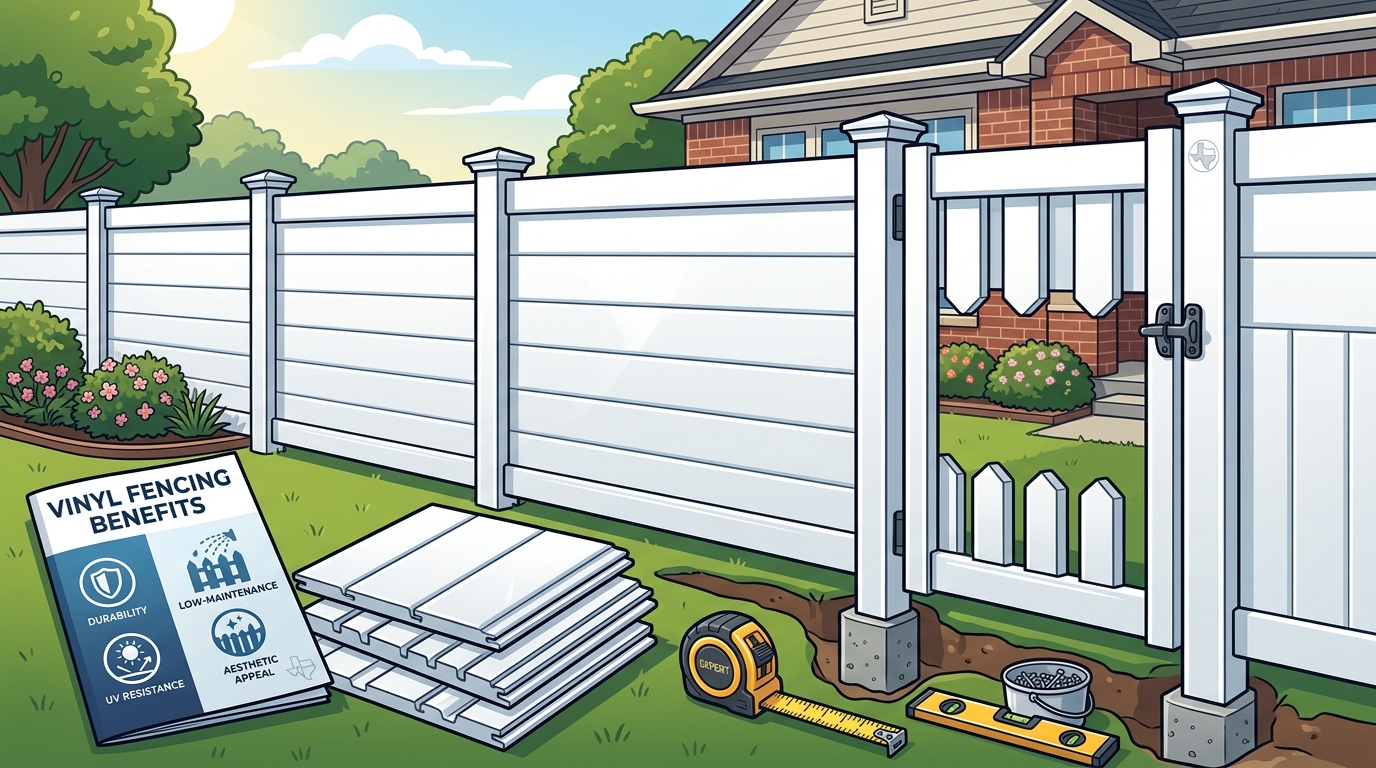
Cost of Ownership Over 20 Years
The table below illustrates approximate total costs for a 150-linear-foot residential fence over a 20-year period, including installation and maintenance.
| Factor | Vinyl Fence | Wood Fence | Chain Link Fence |
|---|---|---|---|
| Installed Cost (per linear ft) | $20 - $40 | $15 - $35 | $10 - $20 |
| Typical Lifespan | 20 - 30 years | 10 - 20 years | 15 - 25 years |
| Annual Maintenance Cost | Near $0 | $200 - $500 | $50 - $150 |
| Estimated 20-Year Total (150 ft) | $3,000 - $6,000 | $6,250 - $15,250+ | $2,500 - $6,000 |
Boosted Curb Appeal and Property Value
Curb appeal is the visual attractiveness of a property as seen from the street, and fencing plays a major role. A clean, well-maintained vinyl fence creates a polished look that complements any home style. Because vinyl retains its appearance without fading or weathering, it keeps your property looking sharp for decades.
Quality fencing can increase property value by 5 to 10 percent, and durable, low-maintenance materials like vinyl tend to deliver a stronger return at resale. If you are considering selling down the road, a vinyl fence is a smart upgrade that future buyers will appreciate.
Style Versatility for Any Home
Modern vinyl fencing comes in a wide range of styles, colors, and textures. Whether you prefer a classic white picket design, a tall privacy panel, or a ranch-rail look, there is a vinyl option to match. Some vinyl products even replicate the grain and tone of natural wood without any of the drawbacks.
This versatility makes vinyl an excellent choice whether your home sits on a suburban lot in Brazoria County or a rural property in Matagorda County. Browse our fence photo gallery for inspiration on styles that work beautifully in the Texas Gulf Coast region.
Vinyl vs. Wood vs. Chain Link: Quick Comparison
Choosing the right fence material depends on your priorities. Below is a side-by-side summary to help you weigh your options.
Durability
Vinyl leads with its resistance to rot, rust, and pests. Wood is vulnerable to moisture and insects without regular treatment. Chain link fencing is sturdy but can rust over time and offers limited privacy.
Maintenance
Vinyl requires only occasional washing. Wood demands staining, painting, and board replacement every few years. Chain link needs periodic rust treatment and may require new tension wire.
Aesthetic Appeal
Vinyl offers a consistent, clean appearance in multiple styles. Wood provides a warm, natural look but weathers unevenly. Chain link is functional but lacks visual warmth, making it better suited to utility areas or pet enclosures.
Key Takeaways
- Vinyl fencing resists rot, warping, insects, and UV damage, making it ideal for the Texas Gulf Coast climate.
- It requires virtually zero maintenance beyond an occasional soap-and-water rinse.
- The 20- to 30-year lifespan often makes vinyl more cost-effective than wood over time.
- Multiple styles and colors let you match any home architecture or landscape design.
- Quality fencing can boost your property value by 5 to 10 percent at resale.
- Professional installation ensures proper post depth, alignment, and long-term performance.
- Superior Fences provides free estimates and expert guidance for vinyl fence projects across Brazoria, Matagorda, and Fort Bend Counties.
Frequently Asked Questions
How long does a vinyl fence last?
A well-installed vinyl fence typically lasts 20 to 30 years or more. Premium-grade PVC with UV inhibitors can maintain its color and strength for decades with minimal care.
Is vinyl fencing more expensive than wood?
The upfront cost of vinyl is generally higher. However, because vinyl eliminates recurring expenses for staining, painting, and board replacement, many homeowners find it more affordable over the life of the fence.
Does vinyl fencing hold up in Texas heat and humidity?
Yes. Quality vinyl is engineered to withstand high temperatures, UV exposure, and moisture. It will not rot or warp the way wood can in humid climates like Southeast Texas.
Can vinyl fencing provide privacy?
Absolutely. Solid privacy panels in 6-foot or 8-foot heights are among the most popular vinyl fence styles. They block sightlines effectively while maintaining an attractive appearance.
Is vinyl fencing eco-friendly?
Vinyl is a long-lasting material that reduces the need for chemical treatments like stains and sealants. Many manufacturers also use recyclable PVC, further reducing environmental impact over the fence's lifespan.
What styles of vinyl fencing are available?
Common styles include privacy panels, picket fences, semi-privacy designs, and ranch rail configurations. Colors range from classic white to tan, gray, and wood-grain finishes.
Does Superior Fences install vinyl fencing?
Yes. Superior Fences installs vinyl fencing for residential and commercial properties throughout Brazoria County, Matagorda County, and Fort Bend County. Contact us for a free estimate.
Do I need a permit to install a vinyl fence in Brazoria County?
Permit requirements vary by municipality. Most cities in Brazoria County require a fence permit for new installations. Our team can help you navigate local codes and HOA guidelines before your project begins.
Get Your Free Vinyl Fence Estimate
Ready to upgrade your property with a durable, low-maintenance vinyl fence? Request your free estimate from Superior Fences today. We serve homeowners across Brazoria County, Matagorda County, and Fort Bend County with top-quality materials and professional installation you can count on.