
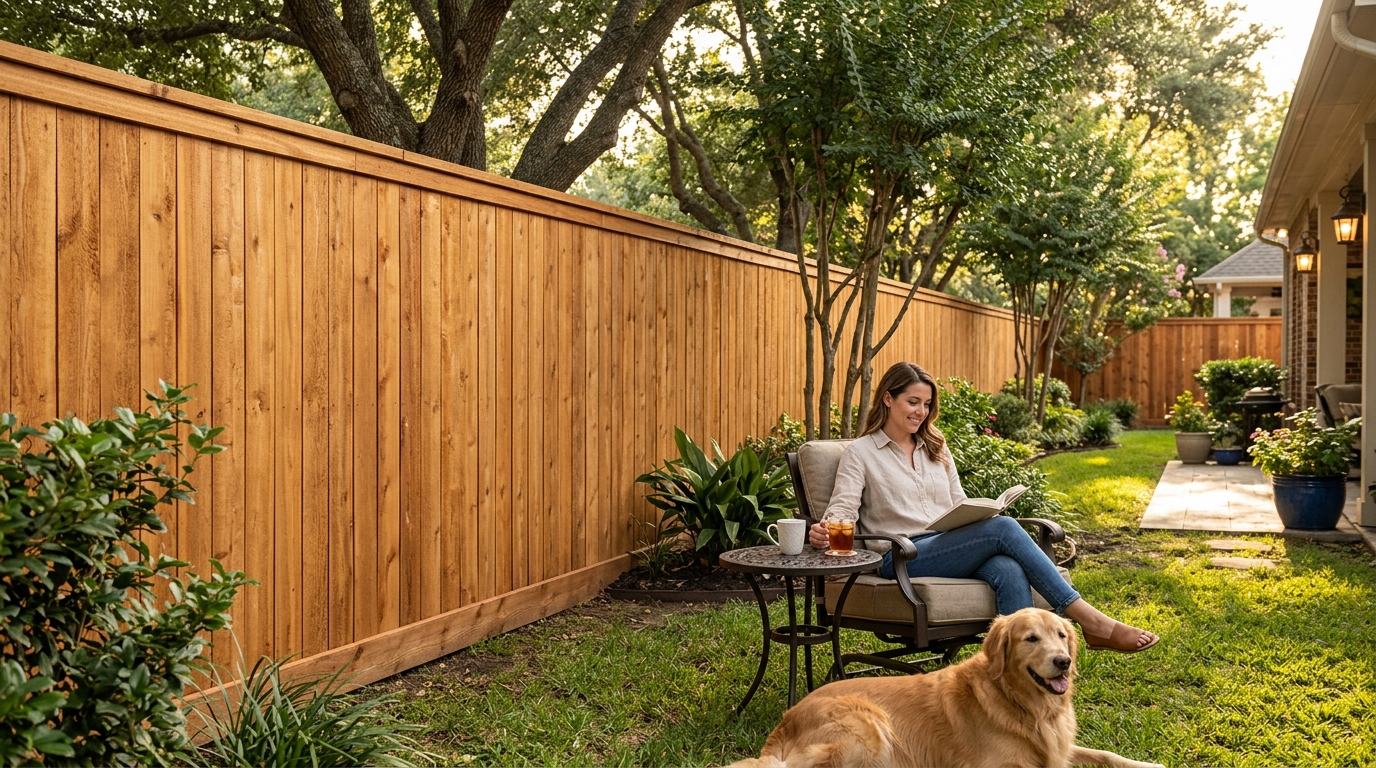
Fort Bend County homeowners face unique environmental challenges that dictate fence longevity and performance. According to recent regional climate data, the area experiences high humidity and periodic severe storms that accelerate material degradation. Choosing the wrong fence type can lead to costly repairs within three years. This guide analyzes the top privacy fence materials available for residential properties in Richmond, Missouri City, and Rosenberg. We evaluate durability, maintenance requirements, and aesthetic value to help you make an informed investment.
Why Cedar Remains the Gold Standard
Cedar privacy fences are widely regarded as the premier choice for residential properties in Fort Bend County. The natural oils in Western Red Cedar provide inherent resistance to rot, decay, and insect damage. This makes it particularly suitable for the humid subtropical climate found in this region. Unlike pressure-treated pine, cedar does not require chemical preservatives to maintain structural integrity.
One of the most significant advantages of cedar is its aesthetic appeal. The wood features a rich, warm grain that enhances curb appeal without immediate staining. Over time, cedar weathers to a distinguished silver-gray patina if left untreated. Homeowners who prefer a natural look often select this option for its timeless elegance. For more details on our cedar installation services, visit our cedor fencing page.
However, cedar comes with a higher upfront cost compared to other materials. It also requires periodic sealing to prevent warping in extreme heat. Despite these maintenance needs, the lifespan of a well-maintained cedar fence often exceeds twenty years. This longevity justifies the initial investment for many property owners.
The Low-Maintenance Vinyl Alternative
Vinyl privacy fences have gained immense popularity in Fort Bend County due to their minimal maintenance requirements. Vinyl is a synthetic material that does not rot, warp, or attract insects. It is impervious to the moisture that typically plagues wooden structures in this area. Homeowners appreciate that a simple hose-down is usually sufficient to keep the fence looking new.
Modern vinyl fencing has evolved significantly in terms of aesthetics. Early versions often looked artificial and cheap. Today, high-quality vinyl mimics the texture and color of real wood with remarkable accuracy. It is available in various heights and styles to meet local zoning regulations. You can explore our premium vinyl options at superior-fences.com/services/vinyl-fencing.
While vinyl is durable, it can become brittle in extreme cold or crack under heavy impact. Fort Bend County rarely experiences freezing temperatures, which is a benefit for vinyl longevity. The material does not fade easily, but prolonged UV exposure can cause slight discoloration over decades. This makes it an excellent choice for busy homeowners who prioritize convenience over natural wood grain.
Composite Fencing: The Middle Ground
Composite fencing blends wood fibers with plastic to create a hybrid material. This combination aims to offer the best of both worlds: the look of wood with the durability of vinyl. Composite fences are resistant to rot, insects, and moisture. They do not require staining or sealing, which reduces long-term maintenance costs.
In Fort Bend County, composite fencing is ideal for homeowners who want the aesthetic of cedar but dread the upkeep. The material is engineered to withstand high humidity without swelling or cracking. It is also environmentally friendly, as many brands use recycled materials in their production. Check out our comparison of composite and wood fencing for deeper insights.
The primary drawback of composite fencing is its cost. It is typically more expensive than vinyl and often more costly than cedar. Additionally, some lower-quality composites can stain or mold in shaded, damp areas. It is crucial to select a high-grade product from a reputable manufacturer. Superior Fences ensures we only install top-tier composite materials that guarantee performance.
Wood vs. Vinyl: A Cost Analysis
Choosing between wood and vinyl often comes down to budget and lifestyle preferences. Wood fences generally have a lower initial cost but higher lifetime maintenance expenses. Vinyl fences have a higher upfront price but negligible maintenance costs. This analysis helps Fort Bend County residents make a financially sound decision.
| Material | Upfront Cost | Maintenance Level | Lifespan | Aesthetic Appeal |
|---|---|---|---|---|
| Cedar | High | Moderate | 15-20+ Years | High (Natural) |
| Pressure-Treated Pine | Low | High | 10-15 Years | Moderate |
| Vinyl | Medium-High | Low | 20-30+ Years | High (Synthetic) |
| Composite | Very High | Low | 20-30+ Years | High (Hybrid) |
Pressure-treated pine is the most budget-friendly option but requires annual staining and sealing. Without this care, it can rot quickly in Fort Bend's humid climate. Cedar offers a better balance of cost and durability. Vinyl provides the lowest lifetime cost for those who can afford the initial premium. Composite is the luxury option for those seeking zero maintenance.
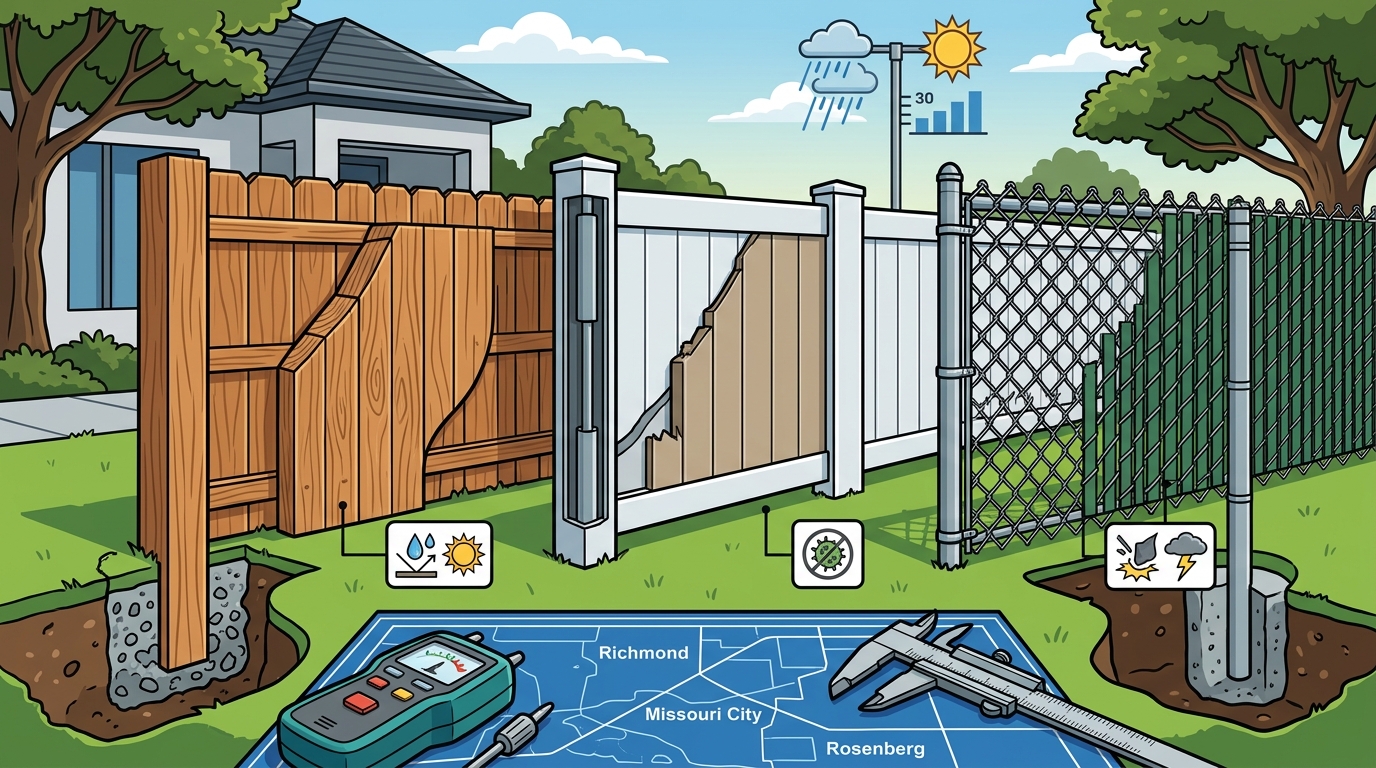
Critical Installation Factors for Local Soil
Proper installation is as important as material selection. Fort Bend County has diverse soil types, including clay and sandy loam. Clay soil expands and contracts with moisture changes, which can destabilize fence posts. Sandy soil drains quickly but may lack the compaction needed for firm post holes.
Superior Fences uses deep-set concrete footings to ensure stability across all soil types. This method prevents leaning and shifting over time. We also account for local wind loads to ensure the fence can withstand severe weather events. Proper gate hardware and hinge placement are critical for long-term functionality. Learn more about our installation process to understand our quality standards.
Permitting is another crucial factor. Some neighborhoods in Fort Bend County have specific height restrictions or setback requirements. Our team handles all necessary permits and inspections to ensure compliance. This saves homeowners from potential fines and legal issues. Always verify local zoning laws before starting a project.
Key Takeaways
- Cedar Durability: Western Red Cedar naturally resists rot and insects, making it ideal for Fort Bend's humidity.
- Vinyl Convenience: Vinyl requires no staining or sealing, offering the lowest maintenance profile for busy homeowners.
- Composite Hybrid: Composite fencing combines wood aesthetics with plastic durability, though it carries a higher price tag.
- Soil Considerations: Clay and sandy soils in the county require deep concrete footings for long-term stability.
- Cost vs. Value: While wood has a lower upfront cost, vinyl often provides better long-term value due to minimal upkeep.
- Local Compliance: Always check HOA rules and county zoning laws regarding fence height and materials before installation.
Frequently Asked Questions
Which fence material lasts longest in Fort Bend County?
Vinyl and composite fences generally offer the longest lifespans, often exceeding thirty years with minimal maintenance. Cedar also lasts a long time but requires periodic sealing to prevent weathering.
Do I need a permit for a privacy fence in Fort Bend County?
Most residential properties in Fort Bend County require a building permit for fences over six feet in height. It is essential to check with local municipal codes and your HOA before starting construction.
How much does a cedar privacy fence cost?
The cost varies based on height, gate complexity, and terrain. Generally, cedar fencing is more expensive than pressure-treated pine but less costly than composite. Contact us for a precise quote tailored to your property.
Can vinyl fences withstand Fort Bend storms?
High-quality vinyl fences are designed to withstand high winds and heavy rain. However, extreme hail or falling debris can cause cracks. Proper post installation is critical for storm resistance.
Is composite fencing worth the extra cost?
Composite fencing is worth the investment if you want the look of wood without the maintenance. It is ideal for homeowners who prefer a pristine appearance year-round without staining or sealing.
What is the best height for a privacy fence?
Six feet is the standard height for maximum privacy in residential areas. Some neighborhoods may allow up to eight feet, but six feet is sufficient for most privacy needs.
How do I maintain a wooden fence?
Wooden fences require annual cleaning and staining or sealing every two to three years. This prevents rot and UV damage, extending the fence's lifespan significantly.
Schedule Your Consultation
Choosing the right privacy fence is a significant investment in your home's security and aesthetics. Superior Fences is dedicated to providing top-quality materials and expert installation for Fort Bend County residents. We understand the local climate and soil conditions, ensuring your fence stands the test of time. Contact us today to schedule a free consultation and estimate. Visit our contact page to get started.