
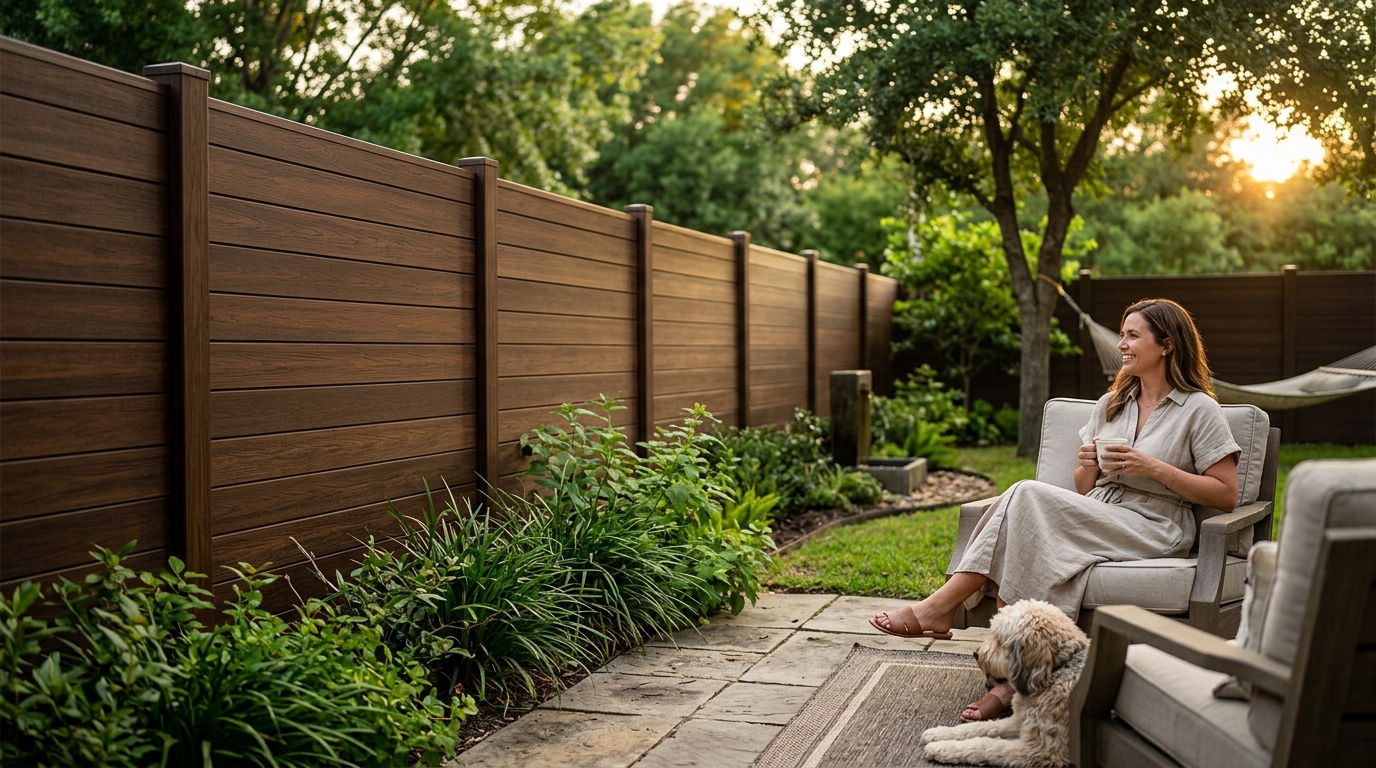
Fort Bend County homeowners face unique environmental challenges that directly impact fence longevity and privacy effectiveness. According to recent regional climate data, the area experiences high humidity and periodic severe thunderstorms that can warp standard wood within three years. This environmental pressure makes material selection critical for maintaining a secure, attractive boundary. Choosing the wrong material often leads to costly repairs and reduced property value. This guide analyzes the top privacy fence options available for residential properties in Richmond, Missouri City, and Pearland.
Understanding Fort Bend Climate Impact
The subtropical climate of Fort Bend County demands fencing materials that resist moisture, insects, and UV degradation. Wood is susceptible to rot and termite damage in this region. Vinyl offers resistance but can become brittle under extreme heat. Composite materials blend the aesthetics of wood with the durability of synthetic polymers. Metal fences provide security but often lack full privacy without additional slats or screens. Understanding these factors is essential for long-term satisfaction.
Premium Wood Privacy Fences
Wood remains the most popular choice for traditional privacy fences in residential neighborhoods. Cedar and redwood are naturally resistant to decay and insects. Pine is a more affordable option but requires regular sealing and staining. The natural grain of wood provides a warm, organic look that complements Texas landscaping.
Cedar and Redwood Advantages
Cedar contains natural oils that repel termites and prevent fungal growth. This makes it ideal for the humid conditions found in Fort Bend County. Redwood offers similar benefits with a richer color palette. Both materials age gracefully, turning a silvery gray if left untreated. However, untreated wood requires annual maintenance to prevent warping.
Pine Cost-Effectiveness
Pine is significantly less expensive than cedar or redwood. It is a softwood that accepts stains and paints well. Homeowners must commit to a rigorous maintenance schedule. Without regular sealing, pine fences can rot within five years in high-humidity areas. This option suits budget-conscious homeowners willing to invest time in upkeep.
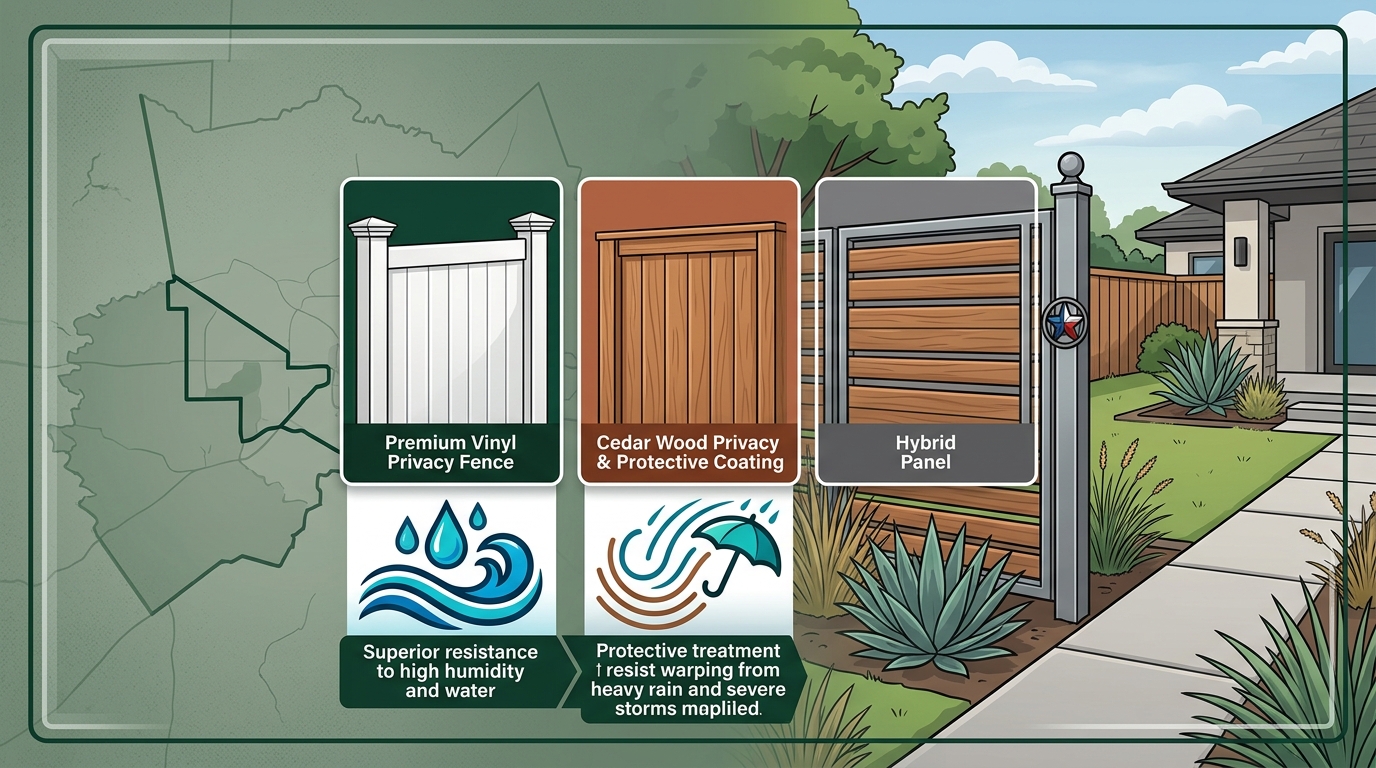
Vinyl and PVC Durability
Vinyl fences have gained immense popularity in Fort Bend County due to their low maintenance requirements. Vinyl is a synthetic material made from polyvinyl chloride (PVC). It does not rot, rust, or require painting. The material is resistant to insects and moisture, making it a durable choice for the local climate.
Heat Resistance and Color Stability
High-quality vinyl fences are engineered to withstand the intense Texas sun. Cheaper vinyl products may yellow or become brittle over time. Premium options include UV inhibitors that maintain color stability for decades. The smooth surface allows for easy cleaning with a garden hose. This makes vinyl an excellent choice for busy homeowners.
Installation Considerations
Vinyl fences are heavy and require precise installation. Posts must be set in concrete to ensure stability against wind. The material does not expand and contract as much as wood, reducing the risk of warping. However, impact damage can crack vinyl panels. Repairing damaged sections often requires replacing the entire panel.
Composite Material Benefits
Composite fencing combines wood fibers with plastic resins to create a hybrid material. This material offers the look of wood with the durability of plastic. Composite is resistant to rot, insects, and moisture. It does not require staining or sealing, making it a low-maintenance option.
Environmental and Aesthetic Appeal
Many composite materials are made from recycled content, appealing to eco-conscious homeowners. The material mimics the texture and grain of real wood closely. It is available in a variety of colors and styles. Composite fences are heavier than vinyl, providing a solid, substantial feel. This weight adds to the fence's stability in windy conditions.
Long-Term Cost Analysis
While the upfront cost of composite fencing is higher than vinyl or pine, the long-term savings are significant. Homeowners save on maintenance costs such as staining, sealing, and repairs. The material retains its appearance for many years without degradation. This makes composite a smart investment for properties intended for long-term residence.
Metal and Aluminum Options
Metal fences, particularly aluminum and steel, offer superior security and durability. While metal fences are not inherently private, they can be fitted with privacy slats or screens. Aluminum is lightweight and rust-resistant, making it suitable for coastal areas. Steel provides maximum strength but requires galvanization to prevent rust.
Aluminum Privacy Solutions
Aluminum fences are often used for pool enclosures and front yards. For privacy, homeowners can install aluminum slats that mimic the look of wood. These slats are durable and do not rot. The metal frame provides a secure boundary that deters intruders. Aluminum requires minimal maintenance, typically just occasional washing.
Steel and Wrought Iron
Wrought iron fences are classic and elegant. They offer high security but limited privacy unless combined with other materials. Steel fences are stronger and more affordable than wrought iron. Both options require periodic painting to prevent rust. In Fort Bend County, galvanized steel is recommended to combat humidity.
Material Comparison Matrix
The following table compares the key attributes of the top privacy fence materials for Fort Bend County homes. This data helps homeowners weigh the pros and cons of each option.
| Material | Initial Cost | Maintenance Level | Lifespan | Privacy Level | Climate Resistance |
|---|---|---|---|---|---|
| Cedar Wood | High | High | 15-20 Years | Full | Moderate |
| Vinyl/PVC | Medium | Low | 30+ Years | Full | High |
| Composite | Very High | Very Low | 25-30 Years | Full | High |
| Aluminum | Medium | Low | 20+ Years | Partial/Full | Very High |
| Steel | Medium-High | Medium | 20-30 Years | Partial/Full | High |
Key Takeaways
- Climate Suitability: Fort Bend County's humidity favors vinyl and composite materials for their resistance to rot and insect damage.
- Maintenance Trade-offs: Wood offers natural beauty but requires annual sealing, while vinyl and composite offer low maintenance at a higher upfront cost.
- Longevity: Premium vinyl and composite fences can last 30 years or more, outlasting traditional wood fences by a significant margin.
- Cost Efficiency: While pine is the cheapest initial option, its short lifespan in humid climates makes it less cost-effective over time.
- Security vs. Privacy: Metal fences provide superior security but often require additional slats or screens to achieve full privacy.
- Property Value: High-quality privacy fences can increase residential property value by up to 200 percent according to industry standards.
- Local Expertise: Professional installation is critical to ensure fence posts are set correctly for the local soil and weather conditions.
Frequently Asked Questions
Which fence material is best for the Fort Bend County climate?
Vinyl and composite materials are generally considered the best for Fort Bend County due to their resistance to humidity, insects, and UV radiation. Wood requires more maintenance to prevent rot in this environment.
How long does a cedar privacy fence last in Texas?
A well-maintained cedar privacy fence can last 15 to 20 years in Texas. Without regular sealing and staining, the lifespan may be reduced to 5-10 years due to moisture damage.
Is vinyl fencing prone to cracking in extreme heat?
High-quality vinyl fencing is engineered to withstand extreme heat and does not crack easily. Lower-quality vinyl may become brittle over time, so it is important to choose a premium product.
Can I add privacy to a metal fence?
Yes, you can add privacy to a metal fence by installing privacy slats, screens, or climbing vines. Aluminum slats are a popular option as they are rust-resistant and durable.
What is the most cost-effective privacy fence option?
Pine wood is the most cost-effective option initially, but vinyl offers better long-term value due to its low maintenance requirements and longer lifespan.
Do I need a permit for a privacy fence in Fort Bend County?
Permit requirements vary by municipality within Fort Bend County. Homeowners should check with their local city hall or homeowners association before installing a new fence.
How much does a privacy fence installation cost?
The cost of privacy fence installation varies based on material and linear footage. On average, homeowners can expect to pay between $20 and $50 per linear foot for professional installation.
Get Your Free Estimate
Choosing the right privacy fence material is a significant investment in your home's security and aesthetics. Superior Fences is dedicated to providing high-quality installation services for Fort Bend County residents. Our team specializes in cedar, vinyl, composite, and metal fencing solutions tailored to your specific needs. Contact us today to schedule a consultation and receive a detailed estimate for your project.