
Common Fencing Mistakes on Uneven Fort Bend County Properties and How to Avoid Them
Installing a fence on sloped terrain in Fort Bend County presents unique engineering challenges that standard flat-ground techniques cannot address. According to the United States Census Bureau, Fort Bend County has experienced significant residential growth, leading to a surge in complex property developments where natural topography is often preserved. This geographic reality means that many homeowners are now tackling projects that require specialized knowledge of contouring, post-setting, and material selection. Ignoring these nuances can lead to structural failure, aesthetic degradation, and costly repairs within a few years. Understanding the specific demands of the local soil and slope is the first step toward a durable installation. (Wood Fences Vinyl Fences)
Understanding Slope Types and Fencing Strategies
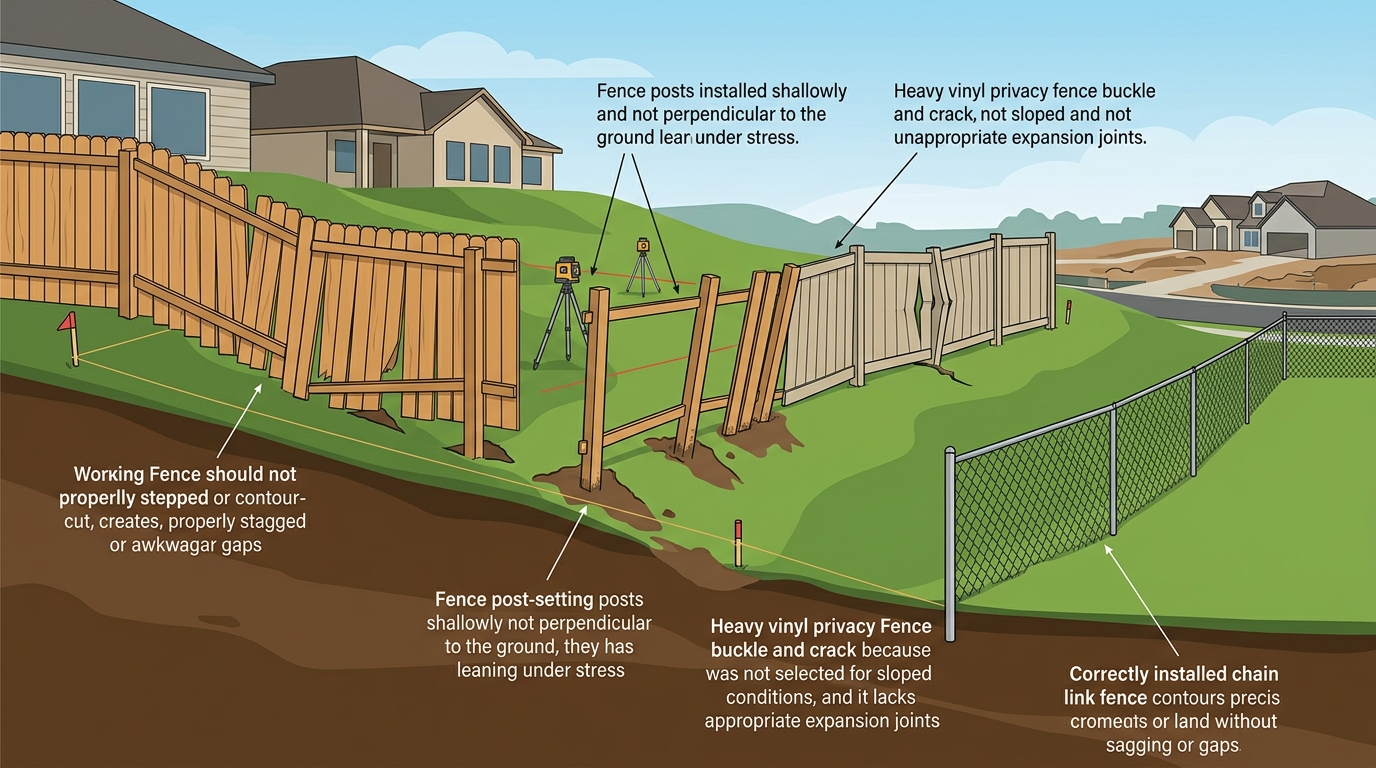
The first mistake homeowners make is treating all slopes as identical. In reality, the degree of incline dictates the structural approach required. A gentle grade may allow for stepped installation, while a steep drop requires racking. Stepped fencing involves creating horizontal sections that follow the contour of the land in a stair-step pattern. This method is ideal for moderate slopes and maintains a uniform height relative to the ground. However, it can leave triangular gaps between the bottom of the fence and the soil, which may require additional filling or mesh to prevent pets or small children from passing through.
Conversely, racked fencing follows the slope of the land, keeping the fence panels parallel to the incline. This approach is necessary for steep terrain but requires careful calculation to ensure the fence remains plumb and secure. According to industry standards for residential construction, the angle of the slope must be evaluated to determine if the structural integrity of the posts will be compromised. If the slope is too steep, racked fencing may result in excessive gaps at the top of the panels, creating a security risk. Professional assessors often recommend a hybrid approach for complex properties, combining both techniques to balance aesthetics and function.
Another critical consideration is the soil composition typical of Fort Bend County. The region is known for its expansive clay soils, which expand when wet and shrink during dry periods. This movement can destabilize fence posts over time. Homeowners often overlook the need for deeper post holes or concrete footings that extend below the frost line and active soil layer. Without proper anchoring, even the best fencing materials will succumb to the shifting earth. Consulting with local experts who understand the regional geology is essential for long-term stability.
Post-Setting Errors on Inclined Ground
Improper post installation is the most common cause of fence failure on uneven ground. One frequent error is setting posts at a uniform depth without accounting for the slope. On a hill, the uphill side of the post requires a deeper hole than the downhill side to ensure the post is plumb and the concrete footing is level. If the post is set at a constant depth, the concrete may be too thin on the uphill side, leading to cracking and eventual collapse under wind load.
Another mistake is using insufficient concrete volume. Many DIY enthusiasts underestimate the amount of concrete needed to secure a post in sloped terrain. The concrete must be poured in a way that creates a stable base, often requiring a "bell" shape at the bottom to resist uplift. According to the American Fence Association, proper concrete placement is critical for withstanding the lateral forces exerted by wind and soil pressure. Neglecting this detail can result in posts that lean or pull out entirely during severe weather events.
Additionally, homeowners often fail to account for the natural settling of the soil around the post. Over time, the ground around the concrete footing can erode or settle, leaving the post unsupported. To prevent this, it is crucial to grade the soil away from the post after the concrete has cured. This ensures that water drains away from the base, reducing the risk of rot in wooden posts and corrosion in metal components. Regular inspection and maintenance of the soil grade can extend the lifespan of the fence significantly.
Material Selection for Uneven Terrain
Choosing the wrong material for a sloped property is a costly error. Wood fences, while aesthetically pleasing, can be challenging to install on uneven ground. The natural expansion and contraction of wood due to humidity changes can exacerbate gaps in stepped or racked installations. Vinyl fencing is often recommended for its durability and low maintenance, but it requires precise cutting and fitting to follow the contour of the land. Vinyl panels are rigid and cannot be easily bent, so custom fabrication is often necessary for complex slopes.
Chain link fencing is another popular option for uneven terrain due to its flexibility. It can be easily racked to follow steep slopes without the need for complex structural adjustments. However, chain link may not provide the privacy or aesthetic appeal that some homeowners desire. For those seeking privacy on a slope, vinyl privacy fences with custom-cut panels or wood fences with specialized hardware are better choices. It is important to consider the long-term maintenance requirements of each material, especially in the humid climate of Texas.
Ornamental aluminum fencing is also a viable option for slopes, particularly for commercial properties or homes with specific security needs. Aluminum is lightweight yet strong, making it easier to install on uneven ground compared to heavier materials. However, it requires professional installation to ensure that the posts are securely anchored and the panels are properly aligned. According to local building codes in Fort Bend County, certain types of fencing may require permits, especially if they exceed a specific height or are located near utility lines. Always verify local regulations before selecting materials.
Gate Mechanics on Slopes
Gates are the most vulnerable component of any fence, especially on uneven ground. A common mistake is installing a standard gate on a slope without adjusting the hinge and latch mechanisms. Gravity will cause a standard gate to sag or swing open if not properly supported. To avoid this, gates on slopes must be installed with heavy-duty hinges and latches that can accommodate the angle of the terrain. Self-closing hinges are often recommended to ensure the gate remains closed despite the incline.
Another issue is the clearance between the bottom of the gate and the ground. On a slope, the gap can vary significantly, leading to drafts, pests, or security vulnerabilities. Custom gate fabrication is often required to ensure a tight fit. This may involve cutting the gate to match the slope or installing a adjustable bottom seal. According to the International Door Association, proper gate alignment is critical for the longevity of the hardware and the security of the property. Misaligned gates can cause premature wear on hinges and latches, leading to frequent repairs.
For automated gates, the slope can interfere with the operation of the gate operator. The motor must be calibrated to handle the additional weight and resistance caused by the incline. Homeowners should consult with a professional to ensure that the gate operator is rated for the specific slope and weight of the gate. Failure to do so can result in motor burnout or unsafe operation. Regular maintenance of the gate mechanism is essential to prevent malfunctions.
Comparison of Fencing Methods for Slopes
Selecting the right fencing method depends on the specific characteristics of your property. The table below compares common fencing methods for uneven terrain in Fort Bend County.
| Fencing Method | Best For | Pros | Cons |
|---|---|---|---|
| Stepped Fencing | Moderate slopes | Uniform appearance, easier installation | Gaps at the bottom, not for steep slopes |
| Racked Fencing | Steep slopes | No gaps, follows terrain | Complex installation, potential top gaps |
| Vinyl Privacy | Low maintenance needs | Durable, no painting required | Higher cost, requires custom fitting |
| Chain Link | Budget-conscious projects | Flexible, affordable | Lacks privacy, less aesthetic |
| Wood Privacy | Custom aesthetic | Natural look, customizable | High maintenance, susceptible to rot |
Each method has its advantages and disadvantages. Stepped fencing is often the most cost-effective for moderate slopes, while racked fencing is necessary for steeper inclines. Vinyl offers durability but requires precise installation. Chain link is affordable but lacks privacy. Wood provides a natural look but demands regular maintenance. Homeowners should weigh these factors against their budget, aesthetic preferences, and the specific topography of their property.
Key Takeaways
- Slope Assessment: Evaluate the degree of slope to determine if stepped or racked fencing is appropriate for your property.
- Post Installation: Ensure posts are set at the correct depth and angle to account for the incline and soil movement.
- Material Choice: Select materials that can withstand the local climate and terrain, such as vinyl or treated wood.
- Gate Mechanics: Use heavy-duty hinges and latches designed for sloped terrain to prevent sagging and misalignment.
- Local Regulations: Check Fort Bend County building codes for permit requirements and height restrictions.
- Professional Help: Consider hiring experienced fence installers who understand the challenges of uneven ground.
- Maintenance: Regularly inspect and maintain the fence to address issues like soil erosion and hardware wear.
Frequently Asked Questions
Can I install a fence on a steep slope?
Yes, you can install a fence on a steep slope using racked fencing techniques. This method involves angling the fence panels to follow the contour of the land. However, it requires precise installation to ensure stability and security. Professional assistance is often recommended for steep slopes.
What is the best material for uneven terrain?
Vinyl and chain link are often considered the best materials for uneven terrain due to their flexibility and durability. Vinyl offers a low-maintenance option that can be custom-fitted to slopes, while chain link is naturally flexible and easy to install on inclines.
How do I prevent fence posts from shifting on a hill?
To prevent posts from shifting, ensure they are set deep enough and use adequate concrete to secure them. Grading the soil away from the post can also help prevent water accumulation and soil erosion. Consulting with local experts who understand the regional soil conditions is crucial.
Do I need a permit for a fence in Fort Bend County?
Permit requirements vary based on the fence height, location, and type. It is advisable to check with Fort Bend County building authorities to determine if a permit is required for your specific project. Failure to obtain necessary permits can result in fines or required removal of the fence.
How do I choose between stepped and racked fencing?
Stepped fencing is suitable for moderate slopes and provides a uniform appearance. Racked fencing is necessary for steep slopes and follows the terrain more closely. The choice depends on the degree of the slope and your aesthetic preferences.
Can I automate a gate on a sloped property?
Yes, you can automate a gate on a sloped property, but it requires careful calibration of the gate operator to handle the additional weight and resistance. Professional installation and adjustment are essential to ensure safe and reliable operation.
What maintenance is required for fences on uneven ground?
Regular maintenance includes inspecting posts for stability, checking hardware for wear, and ensuring the soil around the base is properly graded. Addressing issues promptly can prevent costly repairs and extend the lifespan of the fence.
Contact Superior Fence Services
Installing a fence on uneven ground in Fort Bend County requires expertise, precision, and a deep understanding of local conditions. Superior Fence Services has over 35 years of experience specializing in residential and commercial fence installations. Our team is equipped to handle complex slopes, custom gate fabrication, and all types of fencing materials. We offer competitive pricing and a workmanship warranty to ensure your satisfaction. Contact us today to schedule a free estimate and discuss your fencing needs. Visit our About Us page to learn more about our commitment to quality and service. Explore our Photo Gallery to see examples of our work. For financing options, please visit Lyon Financial. We proudly serve Brazoria, Fort Bend, Matagorda, and Wharton Counties.