
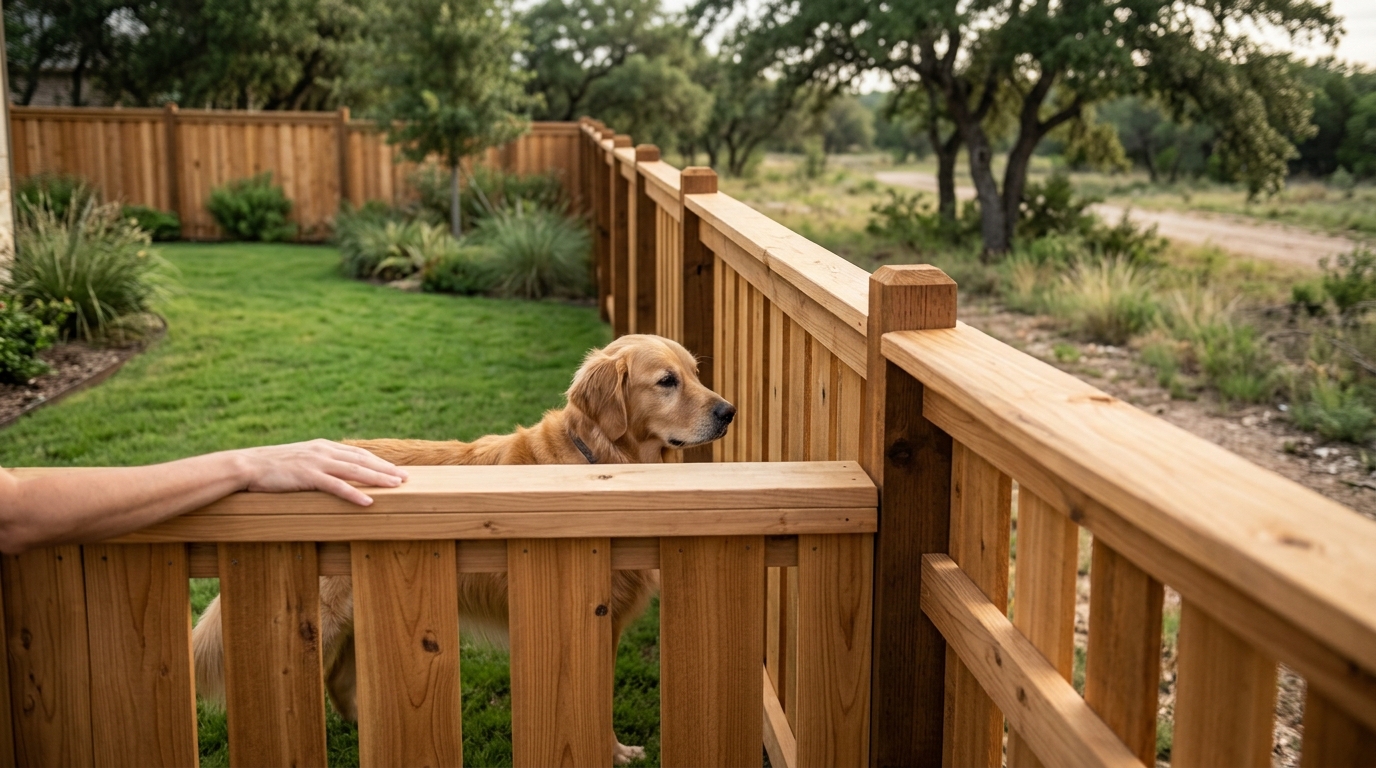
Over 60% of pet escapes are attributed to inadequate fencing structures rather than animal behavior alone. This statistic highlights a critical gap in how homeowners approach property security. Many residents in Brazoria County and surrounding areas assume that any barrier will suffice for their dogs or cats. However, the reality of Texas weather and local wildlife demands a more strategic approach. At Superior Fence Services, we see the consequences of these oversights daily. Our team has spent over 35 years refining the art of secure containment. This guide details the most frequent errors and provides the professional insights needed to keep your pets safe. (About Us Texas Fence)
Mistake 1: Ignoring Gaps and Burrowing Risks
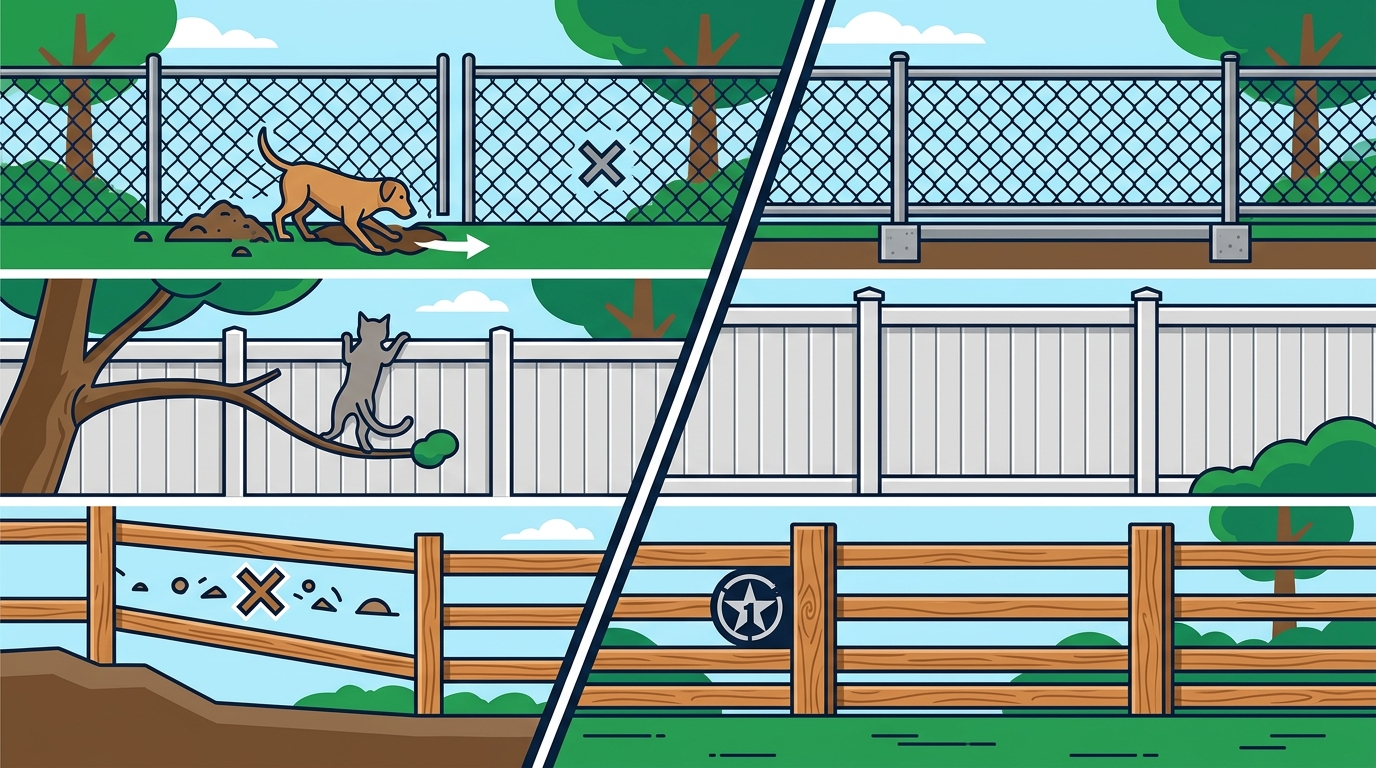
One of the most dangerous oversights is leaving gaps at the base of the fence. Small dogs, terriers, and even large breeds can squeeze through or dig under barriers that seem secure. A chain link fence with wide mesh spacing is particularly risky for smaller pets. Chain link fencing is a metal wire fence constructed from galvanized or polyvinyl-coated steel wire. While durable, it requires specific mesh sizes to be effective for pets.
To avoid this, ensure your fence has no gaps larger than two inches. For chain link installations, use a smaller mesh size, such as 2-inch or 1.5-inch diamond pattern. If you choose wood or vinyl, ensure the bottom boards are buried or secured tightly to the ground. Superior Fence Services recommends adding a concrete footer or burying the fence line six inches deep to prevent digging. This simple step eliminates the primary escape route for determined burrowers.
Mistake 2: Choosing the Wrong Material for the Climate
Texas weather is harsh on outdoor structures. Heat, humidity, and sudden storms can warp wood and degrade lower-quality vinyl. Homeowners often install wood fences without considering treatment levels. Treated wood is timber infused with chemical preservatives to resist rot, decay, and insect damage. Without proper treatment, wood fences in Brazoria County can rot within a few years, creating weak points for pets to exploit.
Vinyl fences are a popular alternative because they do not rot. However, not all vinyl is created equal. Cheap vinyl becomes brittle in extreme heat and can crack under impact. Ornamental metal fences are another option, but they offer less privacy and may require additional screening to prevent pets from seeing distractions outside. Always consult with professionals who understand local climate impacts. Our team at Superior Fence Services specializes in materials that withstand the Texas environment while maintaining structural integrity.
Mistake 3: Neglecting Gate Hardware and Latches
The gate is the weakest link in any containment system. Many pet owners install standard residential latches that dogs can learn to manipulate. Smart dogs can push down on lever-style handles or nudge open gates that are not properly aligned. Gate operators are mechanical devices that automate the opening and closing of gates. While automatic gates add convenience, they must be paired with secure manual overrides and robust locking mechanisms.
To secure your gate, use a latch that requires two distinct actions to open, such as a slide bolt combined with a hook. For automatic gates, ensure the operator is installed by certified technicians. Superior Fence Services offers custom gate fabrication and installation of both solar and electric gate operators. We ensure that every gate is aligned correctly and that the hardware is heavy-duty enough to resist tampering by pets or unauthorized individuals.
Mistake 4: Underestimating Required Fence Height
Height requirements vary by breed and agility. A six-foot fence is standard for many dogs, but athletic breeds like Border Collies or Huskies can clear higher barriers. Jumping over a fence is a common escape method for active pets. Privacy fences are tall barriers designed to block visibility and provide security. These are often the best choice for pet containment because they also block visual triggers that might encourage jumping.
Assess your pet's jumping ability honestly. If your dog can clear six feet, consider an eight-foot fence or an inward-leaning top rail. For cats, vertical height is less critical than preventing climbing. Smooth vinyl or metal surfaces are harder for cats to climb than wood with horizontal rails. Always prioritize a height that exceeds your pet's maximum jump capability by at least two feet to ensure a safety margin.
Mistake 5: Skipping Regular Maintenance Checks
Even the best fences degrade over time. Loose posts, rusted hinges, and broken slats create immediate escape opportunities. Homeowners often wait for visible damage before acting. By then, a pet may have already escaped. Regular inspections are crucial. Check for loose boards, rust on metal components, and sagging sections.
Superior Fence Services offers repair and maintenance services to keep your fence in top condition. Our workmanship warranty ensures that any issues arising from installation are addressed promptly. We recommend a bi-annual inspection, especially after severe weather events common in Galveston County and surrounding areas. Early detection of minor issues prevents major failures and keeps your pets safe.
Fence Material Comparison for Pet Safety
Choosing the right material involves balancing durability, privacy, and cost. The table below summarizes the key attributes of common fence types for pet containment.
| Fence Type | Pet Safety Rating | Privacy Level | Maintenance Requirement | Best For |
|---|---|---|---|---|
| Vinyl Fences | High | High | Low | Long-term durability and low upkeep |
| Wood Privacy Fences | Medium | High | High | Natural aesthetic and custom heights |
| Chain Link Fences | Medium | Low | Low | Budget-friendly and high visibility |
| Ornamental Metal | Medium | Low | Medium | Security and aesthetic appeal |
| Ranch Rail | Low | None | Medium | Large animals and open pastures |
Key Takeaways
- Gap Control: Ensure no gaps larger than two inches exist at the base or between slats to prevent squeezing.
- Material Durability: Use treated wood or high-grade vinyl to withstand Texas heat and humidity without degrading.
- Gate Security: Install dual-action latches or professional gate operators to prevent unauthorized opening.
- Height Standards: Build fences at least two feet higher than your pet's maximum jump capability.
- Regular Inspections: Conduct bi-annual checks for loose posts, rust, and structural weaknesses.
- Professional Installation: Hire experienced contractors like Superior Fence Services to ensure proper post depth and alignment.
- Local Expertise: Choose materials and designs suited for Brazoria County and surrounding areas' specific climate conditions.
Frequently Asked Questions
What is the best fence height for large dogs?
A height of six to eight feet is generally recommended for large, athletic dogs to prevent jumping over the barrier.
How can I stop my dog from digging under the fence?
Bury the fence line six inches deep or add a concrete footer along the perimeter to block digging access.
Is chain link safe for small pets?
Standard chain link may be unsafe for small pets due to wide mesh. Use a smaller mesh size or add a privacy slat insert.
Do I need a permit for a pet containment fence in Brazoria County?
Permit requirements vary by location. It is best to consult with local authorities or your fencing contractor for specific regulations.
How often should I inspect my fence for pet safety?
Inspect your fence at least twice a year, or after any severe weather events, to identify and repair potential escape points.
What is the difference between treated and untreated wood?
Treated wood is infused with preservatives to resist rot and insects, making it more durable for outdoor use than untreated wood.
Can I install a gate operator myself?
While possible, professional installation ensures proper alignment, safety features, and compliance with local electrical codes.
Secure Your Home with Superior Fence Services
Don't let common mistakes compromise your pet's safety. Superior Fence Services provides expert installation and repair of wood, vinyl, and chain link fences tailored to your needs. Our team serves Brazoria County, Matagorda County, Fort Bend County, and Wharton County with over 35 years of experience. Contact us today for a free estimate and ensure your fence is built to last. Visit our Contact Us page to request your quote.