
Chain link fencing remains the dominant security solution for residential and commercial properties across Southeast Texas due to its unmatched durability against coastal weather patterns. According to industry data on regional infrastructure resilience, over 60% of new property developments in Brazoria and Galveston counties prioritize galvanized steel fencing to combat high humidity and salt air corrosion. This guide details the critical installation standards, material grades, and structural requirements that ensure your fence withstands the unique environmental challenges of the region. (About Us Texas Fence)
Material Specifications and Galvanization
The foundation of a long-lasting chain link fence lies in the metallurgical quality of the steel wire. In Southeast Texas, where salt air accelerates oxidation, standard galvanized coatings are often insufficient for long-term durability. The industry standard for coastal regions requires a minimum G60 galvanized coating, which provides a zinc layer thickness of 0.60 ounces per square foot. This specification ensures that the steel core remains protected from rust for decades, even in high-moisture environments. (Wood Fences Vinyl Fences)
Superior Fence Services utilizes high-tensile steel wire that meets ASTM A641 standards for zinc-coated carbon steel wire. This material choice is not merely a preference but a structural necessity for properties in Brazoria, Matagorda, and Fort Bend counties. The galvanized finish provides a uniform, smooth surface that resists chipping and peeling, maintaining the fence's aesthetic appeal while preserving its tensile strength. (Map Directions to Superior)
For clients seeking enhanced corrosion resistance, black vinyl-coated chain link offers a dual-layer defense. The vinyl coating acts as a physical barrier against salt spray and UV radiation, while the underlying galvanized steel provides the structural backbone. This combination is particularly effective for properties near the Gulf Coast, where environmental stressors are most aggressive. The vinyl layer also reduces glare and provides a more polished appearance for residential neighborhoods. (Pictures)
Post Installation and Structural Integrity
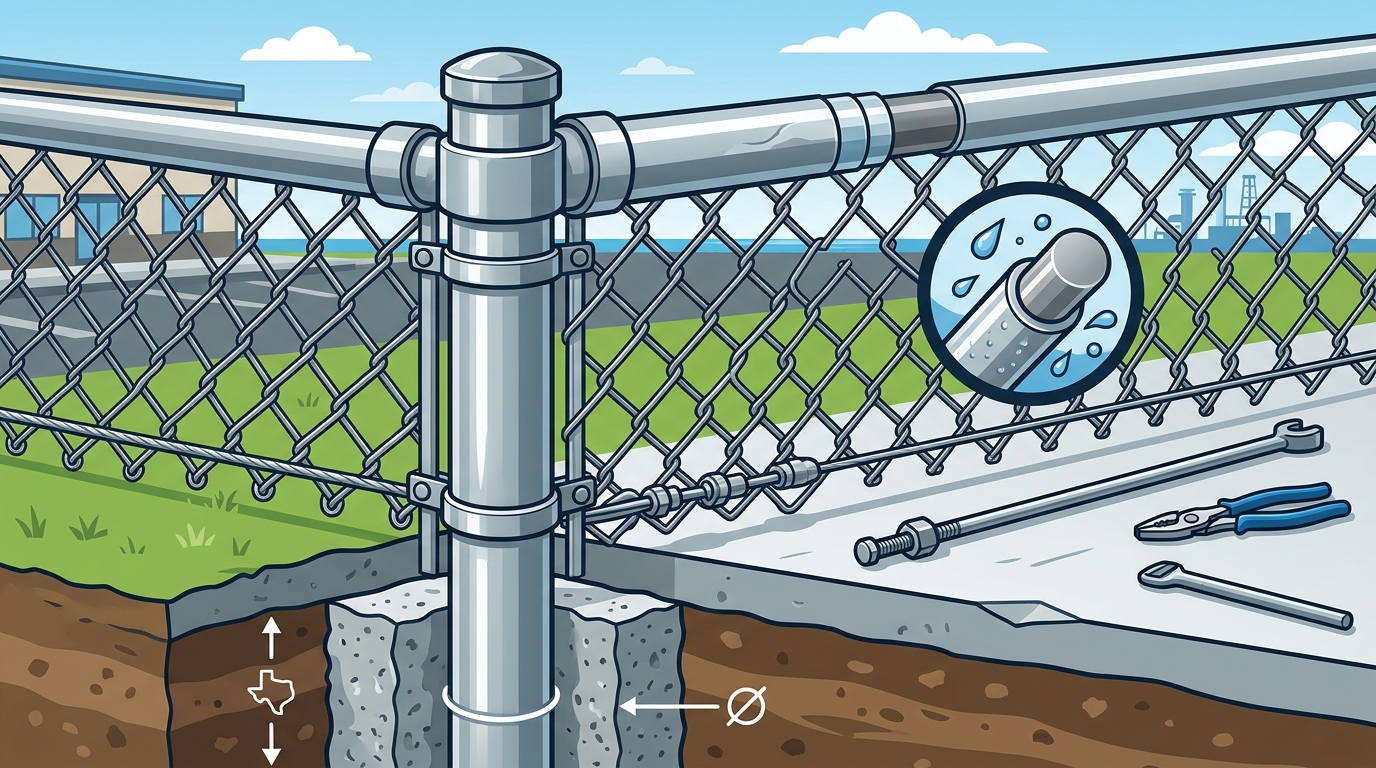
Post placement is the most critical factor in determining the lifespan of a chain link fence. Standard installation practices dictate that posts must be set in concrete footings that extend below the frost line, although frost depth is minimal in Texas, soil stability remains a primary concern. In the soft, sandy soils common to Southeast Texas, post holes must be excavated to a depth of at least 24 inches to ensure stability against wind loads.
Corner and end posts require additional bracing to withstand the lateral tension of the fence fabric. A standard corner post assembly includes a diagonal brace arm and a horizontal brace rod, creating a rigid triangle that prevents the fence from collapsing under stress. This structural reinforcement is essential for maintaining the fence's alignment over time, especially in areas prone to strong winds and storms.
Top rails are often overlooked but play a vital role in maintaining the vertical rigidity of the fence. A 1 1/2-inch galvanized top rail runs continuously along the top of the line posts, providing a secure anchor for the fence fabric and preventing sagging. This component is particularly important for commercial properties where security and boundary definition are paramount. The top rail also adds a finished look to the installation, concealing the tension bars and hooks that secure the fabric.
Mesh Tension and Fabric Standards
The tension of the chain link fabric determines the fence's security level and visual appeal. Proper installation requires the use of a tension bar and tension wire at both the top and bottom of the fence line. The tension wire is stretched tightly between the corner posts and secured with a tension bar, creating a firm anchor point for the fabric.
The fabric itself must be stretched using a fence stretcher to eliminate any slack or waviness. A properly tensioned fence will have a uniform mesh pattern with no visible dips or bulges. This tight tension not only enhances the aesthetic quality but also increases the fence's resistance to forced entry. Loose fabric is easier to cut or push through, compromising the security of the property.
Mesh size and wire gauge are selected based on the intended use of the fence. For residential privacy and security, a 2-inch mesh with a 9-gauge wire is a common standard. This gauge provides sufficient strength to deter intruders while remaining flexible enough to absorb impact without breaking. For commercial applications requiring higher security, a 1 1/2-inch mesh with a 6-gauge wire may be specified to prevent climbing and cutting.
Gate Mechanics and Access Control
Gates are the most vulnerable points in any fencing system and require specialized engineering to function correctly. A standard chain link gate must be constructed with a heavy-duty frame and reinforced hinges to support the weight of the fabric. The gate must swing freely without dragging on the ground, which requires precise leveling during installation.
For larger driveways or commercial entrances, automatic gate operators are often installed to provide convenience and enhanced security. Superior Fence Services offers both solar and electric gate operator installations, tailored to the specific needs of the property. Solar operators are ideal for remote locations where running electrical lines is impractical, while electric operators provide consistent power for high-traffic areas.
Access control systems, including keypads, card readers, and exit loops, are essential for managing entry points. These systems must be integrated seamlessly with the gate operator to ensure smooth operation. Proper wiring and weatherproofing of the control box are critical to prevent damage from the humid Southeast Texas climate. Regular maintenance of the gate mechanism is recommended to ensure long-term reliability.
Regional Compliance and Service Areas
Installing a chain link fence in Southeast Texas requires adherence to local zoning regulations and property line laws. Homeowners associations (HOAs) in communities like Shadow Creek Ranch, Silvercreek, and Woodshore often have specific guidelines regarding fence height, color, and material. It is crucial to review these covenants before beginning any installation project to avoid costly modifications.
Building permits may be required for fences exceeding a certain height, typically six feet, or for commercial properties. Local authorities in Brazoria, Fort Bend, and Galveston counties enforce these regulations to ensure public safety and property integrity. Superior Fence Services assists clients in navigating these requirements, ensuring that every installation is compliant with local codes.
The company serves a wide range of communities across the region, including Angleton, Lake Jackson, Freeport, Clute, and Pearland. Each area presents unique environmental challenges, from the salty air of the coast to the heavy clay soils of the inland areas. Understanding these local conditions allows for tailored installation strategies that maximize the lifespan and performance of the fence.
Key Takeaways
- Galvanization is Critical: Use G60 galvanized or vinyl-coated steel to resist Southeast Texas humidity and salt air.
- Post Depth Matters: Posts must be set at least 24 inches deep in concrete to ensure stability in sandy soils.
- Tension is Security: Properly tensioned fabric prevents sagging and enhances resistance to forced entry.
- Bracing is Essential: Corner and end posts require diagonal bracing to withstand lateral wind loads.
- Gate Maintenance: Automatic operators and access controls require regular servicing to function reliably.
- Local Compliance: Check HOA rules and local permits before installation to avoid legal issues.
- Regional Expertise: Superior Fence Services has over 35 years of experience serving Brazoria and surrounding counties.
Frequently Asked Questions
What is the best type of chain link fence for coastal areas?
Black vinyl-coated chain link is the best option for coastal areas because the vinyl layer provides an additional barrier against salt corrosion, extending the life of the galvanized steel underneath.
How deep should chain link fence posts be set?
Posts should be set at least 24 inches deep in concrete footings to ensure stability, particularly in the sandy soils common to Southeast Texas.
Do I need a permit to install a chain link fence in Brazoria County?
Permits may be required for fences over six feet tall or for commercial properties. It is best to check with local building authorities before starting your project.
What is the difference between G60 and G90 galvanized coatings?
G90 has a thicker zinc coating than G60, offering superior corrosion resistance. However, G60 is generally sufficient for most residential applications in Southeast Texas.
Can you install automatic gates with chain link fences?
Yes, automatic gate operators, including solar and electric models, can be installed on chain link fences to provide convenient and secure access.
How long does a chain link fence last in Texas?
With proper installation and maintenance, a high-quality galvanized chain link fence can last 20 to 30 years or more in the Texas climate.
What areas does Superior Fence Services serve?
We serve Brazoria, Matagorda, Fort Bend, and Galveston counties, including cities like Angleton, Lake Jackson, Freeport, and Pearland.
Contact Superior Fence Services
Ready to secure your property with a high-quality chain link fence? Contact Superior Fence Services today for a free estimate. Our team of experts is ready to help you navigate material options, local regulations, and installation details. Visit our Contact Us page to fill out our estimate form or call us at 979-849-4640. We look forward to working with you to deliver a fence that combines strength, durability, and beauty.