
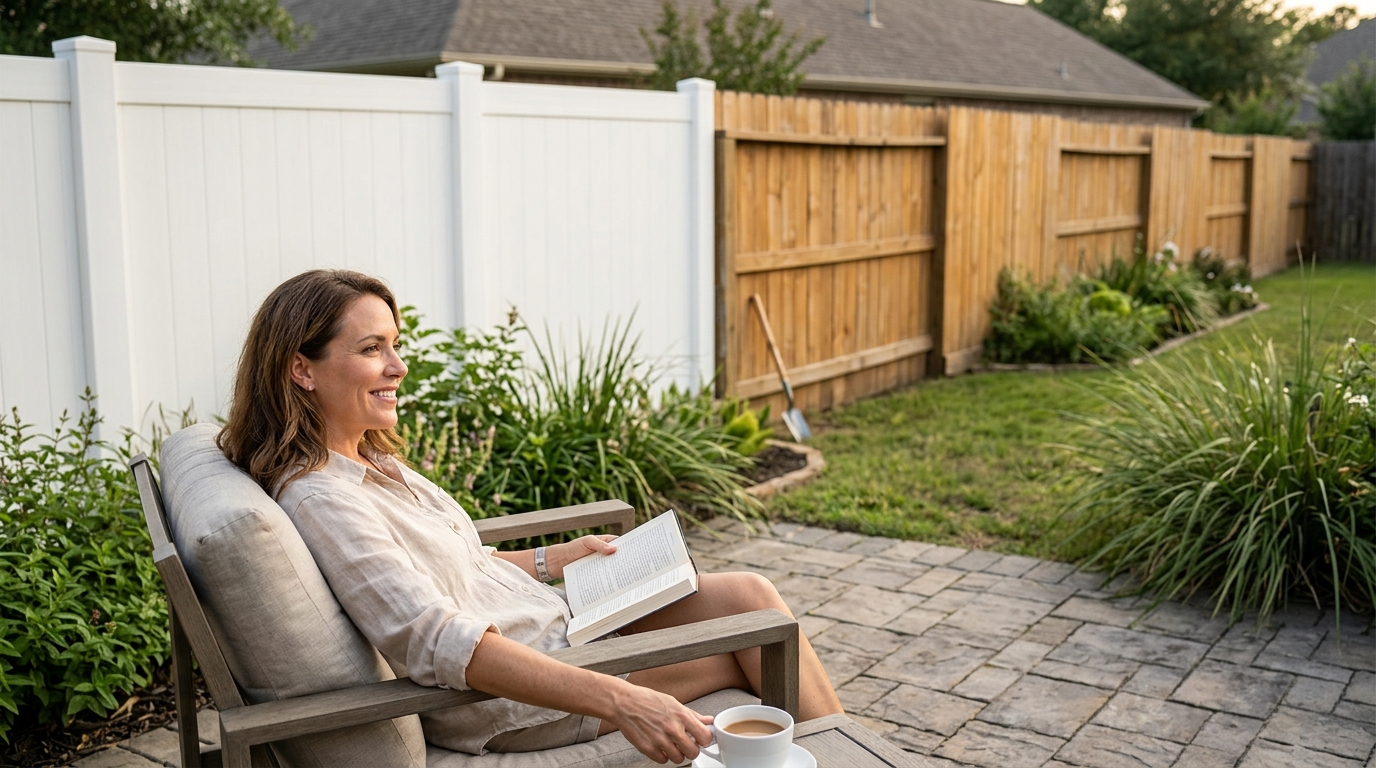
Choosing between vinyl and wood fencing often comes down to long-term upkeep. Vinyl fencing is a synthetic barrier that requires minimal maintenance, while wood fencing is a natural material that demands regular staining, sealing, and physical repairs. Homeowners typically save 10 to 15 hours per year by choosing vinyl over wood. This time savings allows you to focus on enjoying your property rather than maintaining it. Superior Fence Services helps property owners in Brazoria County select the right material for their specific lifestyle and maintenance capacity.
The Labor Intensity of Wood Fencing
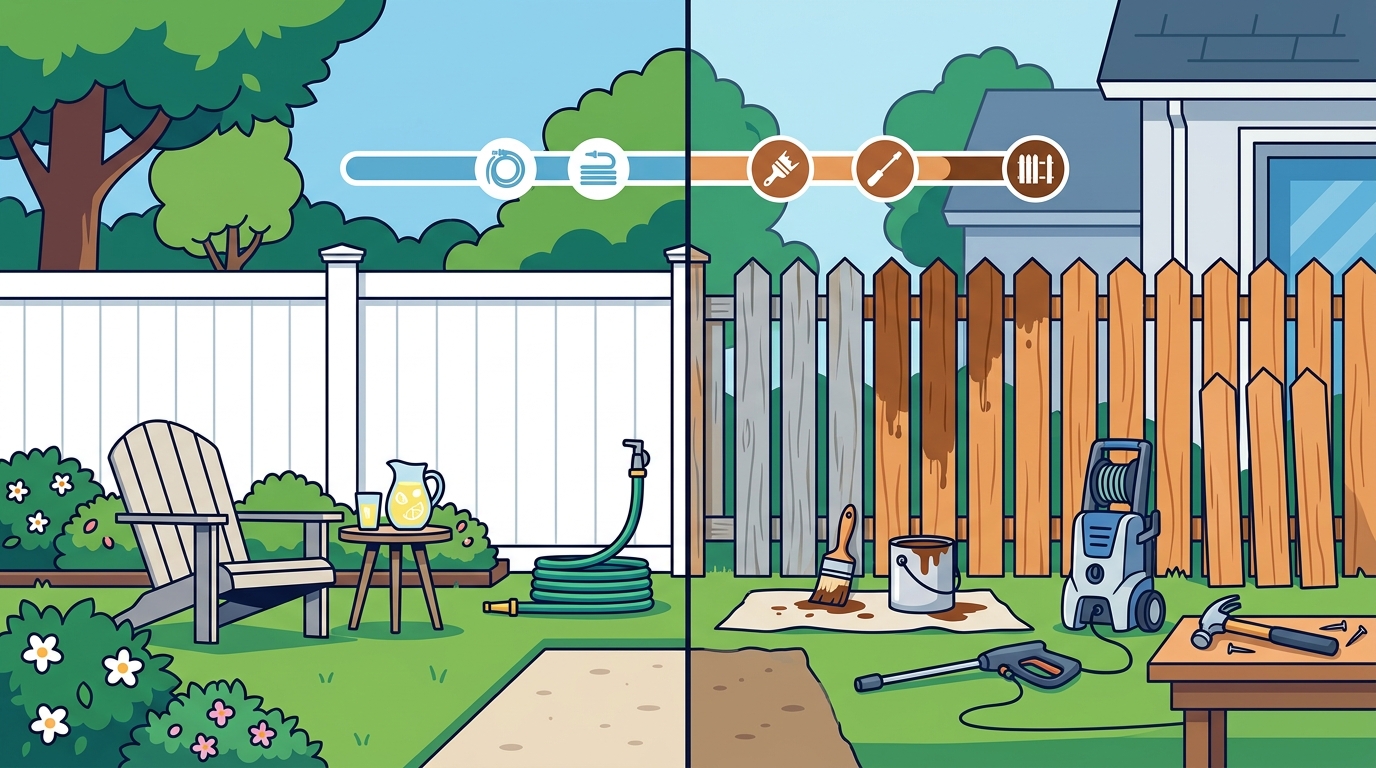
Wood fencing is a natural barrier that is susceptible to environmental degradation. The primary time sink for wood owners is the application of protective coatings. Staining or sealing a standard residential fence requires several days of labor. You must prepare the surface, apply the coating, and allow for drying time. This process must be repeated every two to three years to prevent rot and insect damage. For a 200-foot fence, this can consume 20 to 30 hours of active labor per cycle.
Physical repairs also add to the time commitment. Wood is prone to warping, splitting, and rotting at the base. Replacing a single rotted post or board requires digging, cutting, and fitting new materials. These tasks are physically demanding and often require specialized tools. The cumulative effect of these recurring tasks makes wood a high-maintenance option for busy homeowners.
The Low-Touch Nature of Vinyl Fencing
Vinyl fencing is a durable synthetic material that resists rot, rust, and insect infestation. The maintenance requirement for vinyl is significantly lower than wood. Most owners spend less than two hours per year on upkeep. This time is primarily dedicated to cleaning the surface to remove dirt, pollen, or algae. A garden hose and a mild detergent are usually sufficient for this task. There is no need for staining, sealing, or painting.
The structural integrity of vinyl also reduces repair time. Vinyl does not rot or warp in the same way wood does. If a panel is damaged, it can often be replaced without affecting the surrounding structure. This modularity saves time during repairs. The lack of biological degradation means that vinyl fences maintain their appearance and function for decades with minimal intervention.
Comparing Annual Maintenance Hours
This time savings has financial implications. If you hire a professional for maintenance, the cost difference is significant. Wood staining services can cost several hundred dollars per cycle. Vinyl cleaning is often a one-time annual expense or a DIY task. The reduced need for professional services makes vinyl a more predictable budget item. It also reduces the stress of scheduling contractors for recurring tasks.
Long-Term Durability and Repair Frequency
Durability directly impacts maintenance time. Wood fencing has an average lifespan of 15 to 20 years if properly maintained. However, this lifespan is contingent on consistent care. Neglecting a wood fence can shorten its life to 10 years or less. Vinyl fencing has an average lifespan of 20 to 30 years. It does not require the same level of consistent care to achieve this longevity. The reduced frequency of major repairs means less time spent on large-scale projects.
Environmental factors in Texas also play a role. The heat and humidity can accelerate wood degradation. Vinyl is designed to withstand these conditions without significant performance loss. This resilience means that vinyl fences in regions like Brazoria County require less frequent intervention. The material stability of vinyl ensures that your time investment is protected over the long term.
Choosing the Right Fence for Your Lifestyle
Consulting with a professional can help you make an informed decision. Superior Fence Services offers expert advice on material selection based on your specific needs. They can help you evaluate the time and cost implications of each option. Their experience in the local climate ensures that your fence will perform well for years to come.
Key Takeaways
- Vinyl fencing saves 8 to 13 hours of maintenance per year compared to wood.
- Wood requires staining or sealing every 2 to 3 years, consuming 20 to 30 hours per cycle.
- Vinyl maintenance is limited to occasional cleaning, taking less than 2 hours annually.
- Over 20 years, vinyl saves 160 to 260 hours of labor compared to wood.
- Vinyl fences have a longer lifespan of 20 to 30 years with less consistent care.
- Reduced maintenance time lowers the need for professional services and associated costs.
Frequently Asked Questions
How often do I need to clean a vinyl fence?
Most vinyl fences need cleaning once or twice a year. A simple wash with water and mild detergent is usually sufficient. This task takes less than two hours for a standard residential fence.
Does wood fencing require painting or staining?
Yes, wood fencing requires staining or sealing every two to three years. This process is labor-intensive and can take several days to complete. It is necessary to protect the wood from rot and insects.
Is vinyl fencing more durable than wood?
Vinyl fencing is generally more durable in terms of resistance to rot and insects. It has a lifespan of 20 to 30 years. Wood has a lifespan of 15 to 20 years if properly maintained.
Can I repair a vinyl fence myself?
Yes, minor repairs to vinyl fences can often be done by homeowners. Replacing a damaged panel is straightforward. Wood repairs are more complex and often require specialized tools and skills.
What is the cost difference in maintenance?
Vinyl maintenance is significantly cheaper than wood. Wood staining services can cost several hundred dollars per cycle. Vinyl cleaning is often a low-cost DIY task or a one-time annual expense.
Does vinyl fencing fade in the sun?
High-quality vinyl fencing is UV-stabilized to resist fading. It may experience some color change over many years, but it does not degrade structurally. Wood can also fade if not properly sealed.