
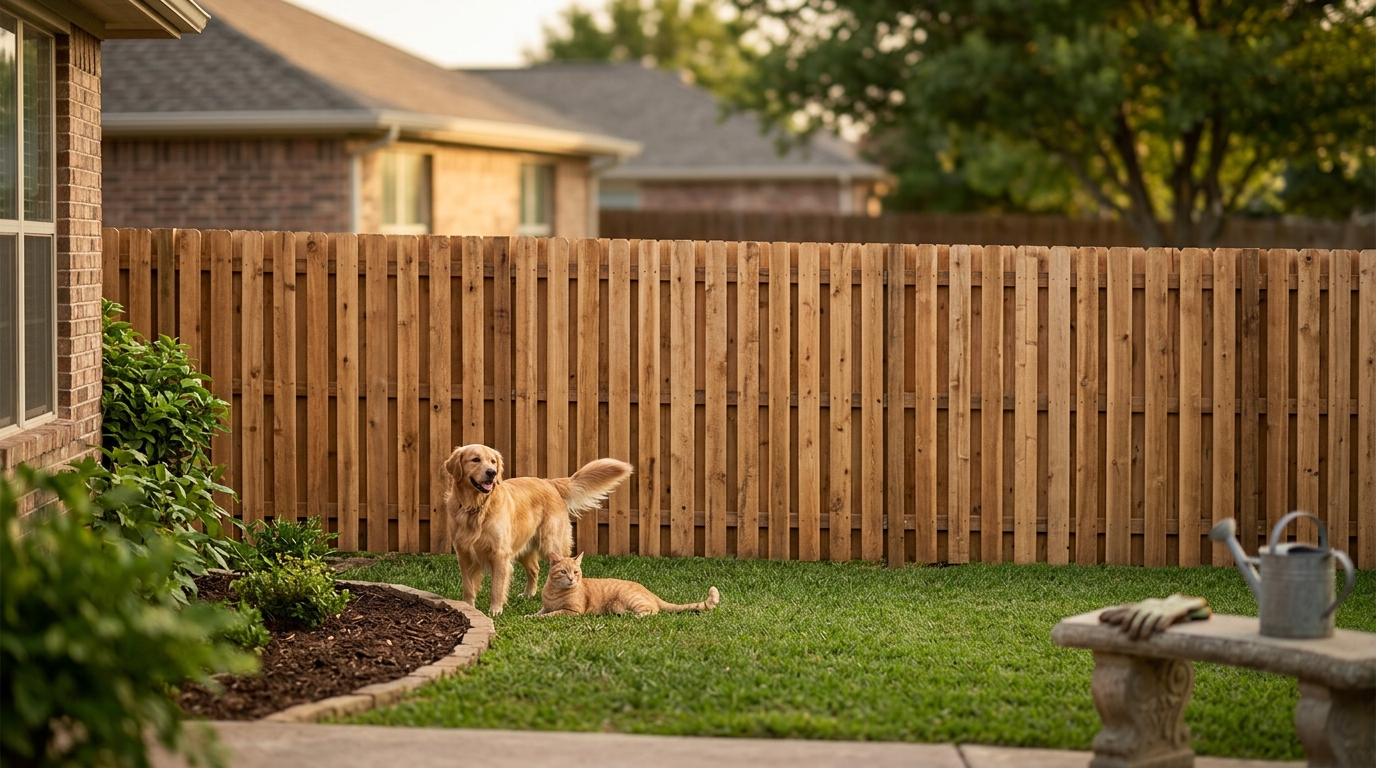
For safely containing dogs and cats, wood privacy fences and vinyl privacy fences are the most effective materials. These options provide solid, gap-free barriers that prevent pets from digging under, climbing over, or squeezing through openings. Unlike chain link or ornamental metal, solid materials block sight lines that trigger escape instincts in many animals. Superior Fence Services specializes in installing these durable privacy solutions across Brazoria, Matagorda, and Fort Bend counties.
Wood Privacy Fences: The Traditional Barrier
However, wood requires maintenance to remain effective. In the humid climate of the Texas Gulf Coast, untreated wood can rot or warp over time. Warping can create small gaps at the bottom or between boards. These gaps can become escape routes for small cats or determined dogs. To maintain containment, wood fences need periodic staining or sealing. This protects the integrity of the barrier and ensures no gaps form. Superior Fence Services offers both cedar and treated wood options to suit different budgets and durability needs.
Vinyl Privacy Fences: Low Maintenance Durability
Vinyl privacy fencing is a synthetic barrier made from high-density polyethylene. This material is highly durable and does not rot, rust, or warp like wood. For pet owners, vinyl is an excellent choice because it maintains its structural integrity without constant upkeep. The smooth surface is difficult for pets to grip, which discourages climbing. Additionally, vinyl panels are typically installed with tight tolerances, minimizing the risk of gaps forming over time.
The primary advantage of vinyl is its longevity in harsh weather. Texas heat and humidity can degrade organic materials, but vinyl remains stable. This makes it a set-and-forget solution for busy pet owners. While the initial investment may be higher than wood, the lack of maintenance costs can balance out over the years. View our photo gallery to see how vinyl fences enhance property aesthetics while providing secure containment.
Why Chain Link and Ornamental Fences Fall Short
Chain link fencing is a wire mesh barrier commonly used for security. While it is durable, it is a poor choice for pet containment. The open mesh allows pets to see through the fence, which can trigger anxiety or escape attempts. More importantly, the gaps in the mesh are large enough for most cats and small dogs to squeeze through. Even if a pet cannot fit through the mesh, they can often dig under the fence if the bottom is not secured.
Installation Tips for Pet-Proofing Your Fence
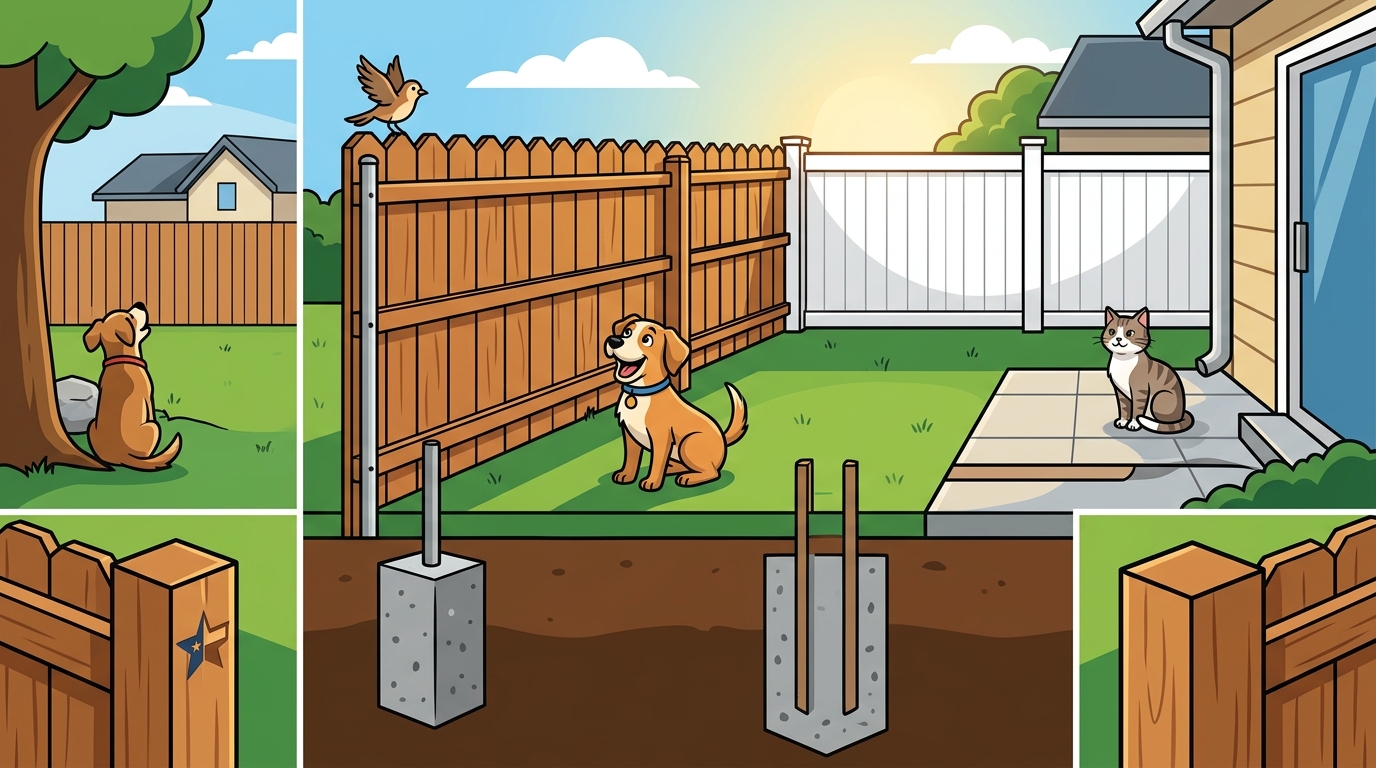
Choosing the right material is only half the battle. Proper installation is critical for ensuring your fence actually contains your pets. One of the most common escape routes is digging. To prevent this, the bottom of the fence should be secured to the ground. This can be done by burying the posts deeply or adding a concrete footer. For wood and vinyl fences, adding a skirt or apron at the bottom can further deter digging.
Another consideration is the height of the fence. Most dogs and cats can jump or climb if given the chance. A standard 6-foot fence is usually sufficient for most pets, but larger or more athletic animals may require 7-foot or 8-foot installations. Contact us for a free estimate to discuss the ideal height and installation methods for your specific pets. Professional installation ensures that the fence is level, secure, and free of gaps.
Key Takeaways
- Wood and vinyl are the best materials for pet containment due to their solid, gap-free construction.
- Visual barriers are crucial; open-mesh fences like chain link can trigger escape instincts in pets.
- Maintenance matters; wood fences need regular sealing to prevent warping and gap formation.
- Height and security should be tailored to your pet's size and athletic ability.
- Professional installation ensures the fence is secure against digging and climbing.
- Superior Fence Services provides expert advice and installation for privacy fences in the Brazoria area.
Frequently Asked Questions
Is a wood fence better than vinyl for keeping dogs inside?
Both are effective, but wood is more traditional and often less expensive upfront. Vinyl is more durable and requires less maintenance. The best choice depends on your budget and willingness to maintain the fence.
Can cats escape through a vinyl fence?
Cats are unlikely to escape through a properly installed vinyl fence. The smooth surface makes it difficult to climb, and the solid panels prevent squeezing through. Ensure the bottom is secured to prevent digging.
How tall should a privacy fence be for a large dog?
A 6-foot fence is standard, but large or athletic dogs may require a 7-foot or 8-foot fence. Consider your dog's jumping ability and the environment on the other side of the fence.
Do I need to bury the fence to prevent digging?
Burying the posts or adding a concrete footer is highly recommended. This prevents pets from digging under the fence. A skirt or apron can also help deter digging.
Can I add a privacy screen to an existing chain link fence?
Yes, you can add a privacy screen or slats to a chain link fence. This creates a solid barrier that blocks visibility. However, ensure the screen is securely attached and does not create gaps.
How long does a vinyl fence last in Texas weather?
Vinyl fences are designed to withstand harsh weather and can last 20 years or more with minimal maintenance. They do not rot, rust, or warp like wood.