
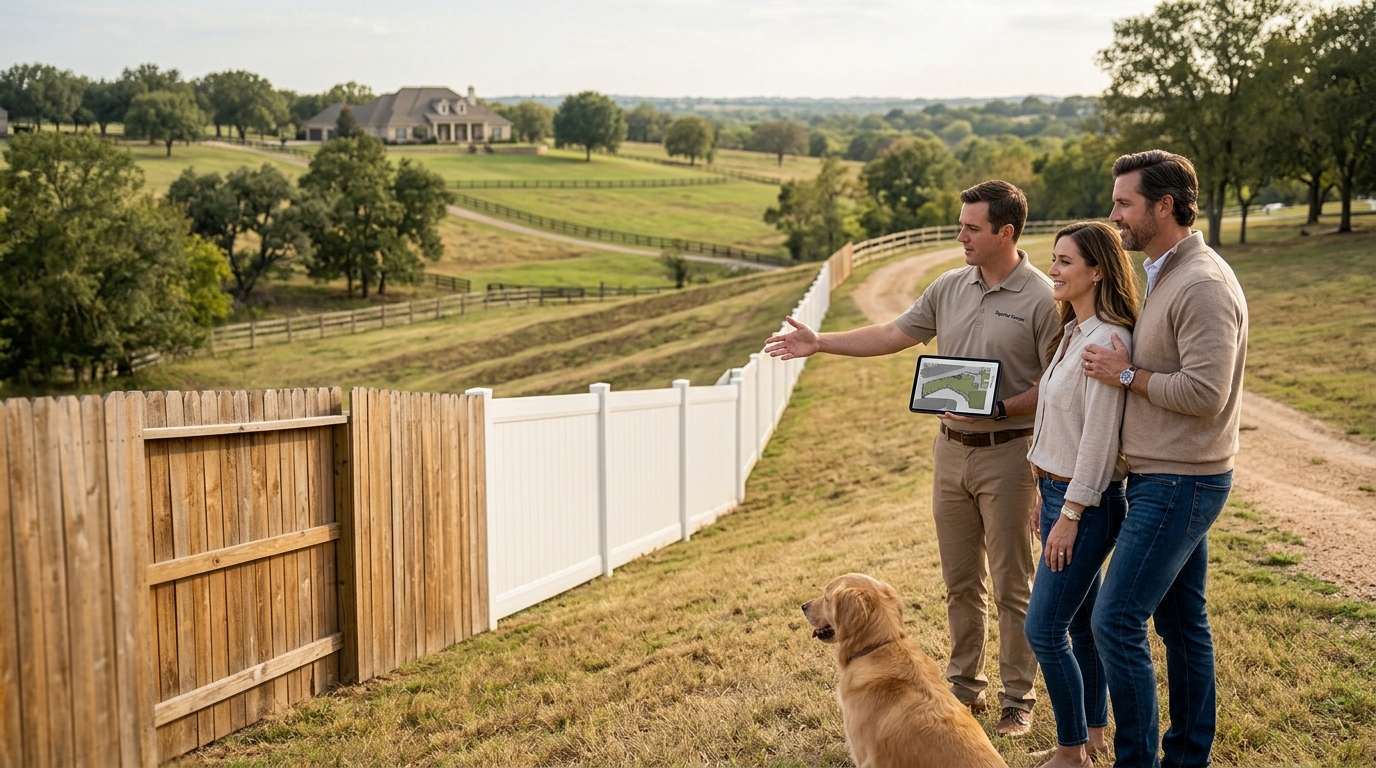
Wood fencing offers a natural aesthetic and lower upfront cost, while vinyl fencing provides superior durability and minimal maintenance on sloped terrain. For large properties in Fort Bend County, the choice depends on your budget, desired lifespan, and willingness to perform regular upkeep. Superior Fence Services helps homeowners evaluate these options based on specific site conditions.
Structural Integrity on Uneven Terrain
Installing fencing on a slope requires specific engineering to prevent sagging or structural failure. Wood fencing is a natural material that can be cut and adjusted to follow the contour of the land, but it requires precise post placement. On steep slopes, wood posts must be set at varying depths to maintain a consistent top rail height. This technique, often called a dog-leg or stepped installation, ensures the fence remains secure against wind and impact. If the soil is unstable, wood posts may shift over time, leading to gaps or leaning. For additional details, review the About Us Texas Fence.
Vinyl fencing is a synthetic polymer product that is rigid and does not bend easily. This rigidity makes it challenging to install on significant slopes because the panels are fixed in size. To handle slopes, vinyl fences often require custom-cut panels or specialized brackets. While this ensures a uniform appearance, it can increase installation complexity. For large properties with varied gradients, the structural stability of the material is a critical factor in long-term security.
Maintenance Demands and Longevity
The longevity of a fence is directly tied to its maintenance requirements. Wood fencing is an organic material that is susceptible to rot, insect damage, and weathering. To maintain its structural integrity, wood fences require periodic staining, sealing, or painting. In the humid climate of Texas, this maintenance cycle is essential to prevent decay. A wood fence that is not maintained will lose its protective barrier, compromising its ability to secure the property.
Vinyl fencing is a low-maintenance material that resists rot, insects, and moisture. It does not require painting or sealing, which significantly reduces the long-term cost of ownership. However, vinyl can become brittle in extreme cold and may crack if impacted by heavy objects. For a large property, the cumulative maintenance effort for wood fencing can be substantial. Homeowners must weigh the initial savings of wood against the recurring labor and material costs of upkeep.
Security Performance and Visibility
Security is a primary function of fencing for large properties. Wood privacy fences provide a solid barrier that blocks sight lines, enhancing privacy and deterring intruders. The density of wood makes it difficult to cut through quickly, offering a physical deterrent. However, wood can warp or split over time, creating potential weak points in the security perimeter. Regular inspections are necessary to identify and repair any compromised sections.
Cost Considerations for Large Perimeters
The total cost of fencing a large property includes both material and installation expenses. Wood fencing is generally less expensive per linear foot than vinyl. This lower upfront cost makes it an attractive option for large perimeters where budget is a constraint. However, the cost of wood increases over time due to maintenance. When calculating the total cost of ownership over 20 years, the difference between wood and vinyl may narrow.
Vinyl fencing has a higher initial price point, but its longevity and low maintenance requirements can result in lower long-term costs. For a large sloped property, installation costs for vinyl may be higher due to the need for custom adjustments. Homeowners should request detailed estimates that account for terrain complexity. Requesting a free estimate from a local professional can help clarify these costs for your specific site.
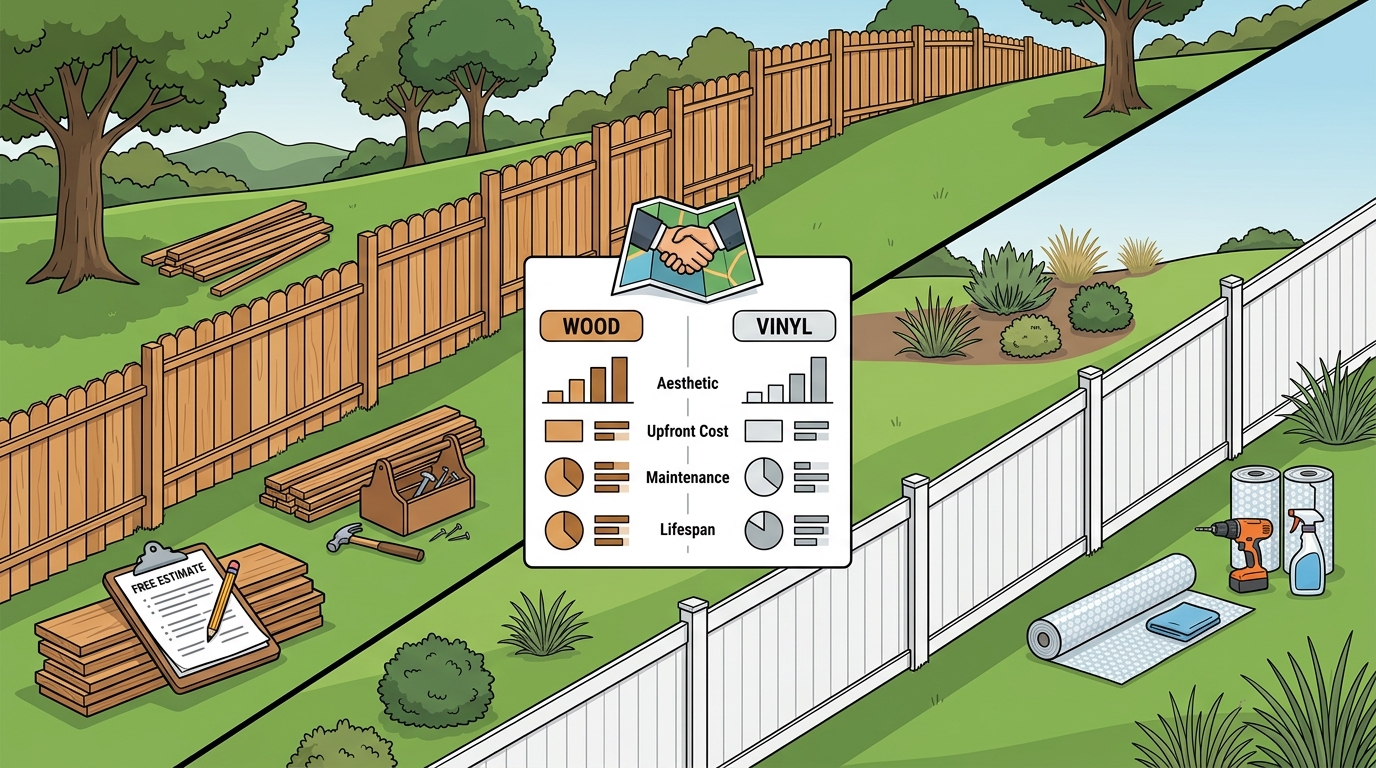
Key Takeaways
- Wood fencing is a natural material that requires regular maintenance to prevent rot and insect damage.
- Sloped terrain requires specific installation techniques for both wood and vinyl to ensure structural stability.
- Wood fencing has a lower upfront cost but higher long-term maintenance expenses.
- Vinyl fencing has a higher upfront cost but lower long-term maintenance expenses.
- Security performance depends on the material's resistance to cutting and climbing.
- Local climate conditions in Texas impact the longevity of both wood and vinyl fencing.
Frequently Asked Questions
Which material is better for steep slopes?
Wood is often easier to install on steep slopes because it can be cut and adjusted to follow the contour. Vinyl requires custom panels or brackets, which can increase cost and complexity.
How long does a wood fence last in Texas?
A well-maintained wood fence can last 15 to 20 years in Texas. Without regular staining or sealing, it may decay faster due to humidity and sun exposure.
Is vinyl fencing more secure than wood?
Can I install a fence on a slope myself?
Installing a fence on a slope is complex and requires precise measurement and post setting. For large properties, professional installation is recommended to ensure structural integrity.
What is the main advantage of vinyl fencing?
The main advantage of vinyl fencing is low maintenance. It does not require painting, sealing, or staining, which saves time and money over the life of the fence.
Does wood fencing require more frequent repairs?
Yes, wood fencing typically requires more frequent repairs due to weathering, rot, and insect damage. Vinyl fencing generally requires fewer repairs but may need replacement if cracked.
Conclusion
Choosing between wood and vinyl fencing for a large sloped property requires balancing aesthetics, cost, and maintenance. Wood offers a traditional look and lower upfront cost, while vinyl provides durability and ease of care. For homeowners in Fort Bend County, consulting with a local expert ensures the fence is installed correctly for the specific terrain. Contact Superior Fence Services to discuss your project and receive a tailored recommendation.