
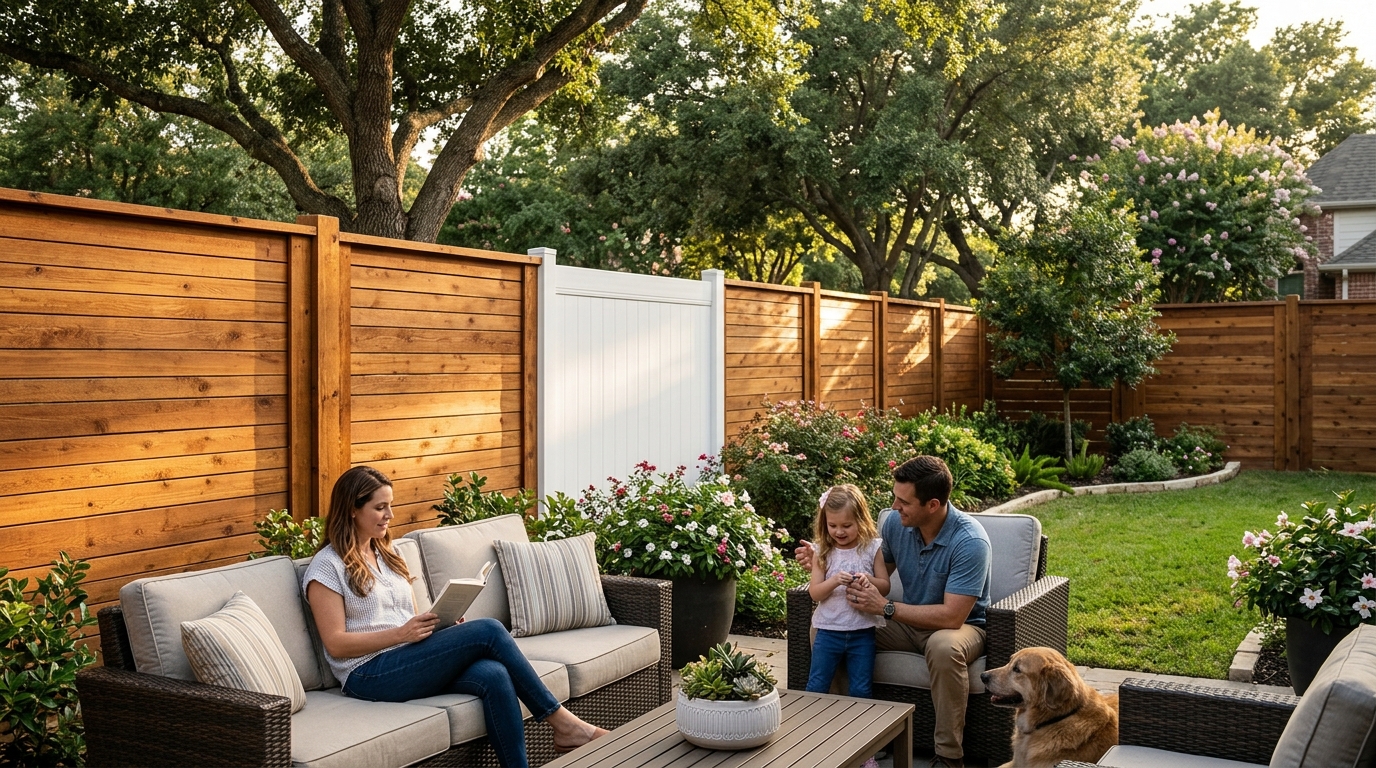
Choosing the right privacy fence material in Fort Bend County requires balancing durability, cost, and local climate conditions. The best options for residential privacy are typically cedar, pressure-treated lumber, and vinyl, each offering distinct advantages for Texas homeowners. This guide explores the top materials, local regulations, and maintenance requirements to help you make an informed decision for your property.
Wood Privacy Fences
Wood privacy fencing is a traditional choice for residential properties in Fort Bend County. It provides a natural aesthetic that blends well with most landscaping styles. Wood fences are highly customizable, allowing homeowners to choose from various heights, styles, and finishes. The material is renewable and can be stained or painted to match the exterior of your home.
Advantages of Wood
Wood offers excellent privacy and sound dampening properties. It is generally more affordable upfront than vinyl or composite options. Homeowners can easily repair damaged sections without replacing the entire fence. The natural look of wood is often preferred by those seeking a classic or rustic appearance.
Disadvantages of Wood
Wood requires regular maintenance to prevent rot, insect damage, and weathering. In the humid climate of Fort Bend County, untreated wood is susceptible to mold and mildew. Staining or sealing is typically required every two to three years to maintain the material's integrity. This ongoing maintenance can add to the long-term cost of ownership.
Vinyl Fencing
Advantages of Vinyl
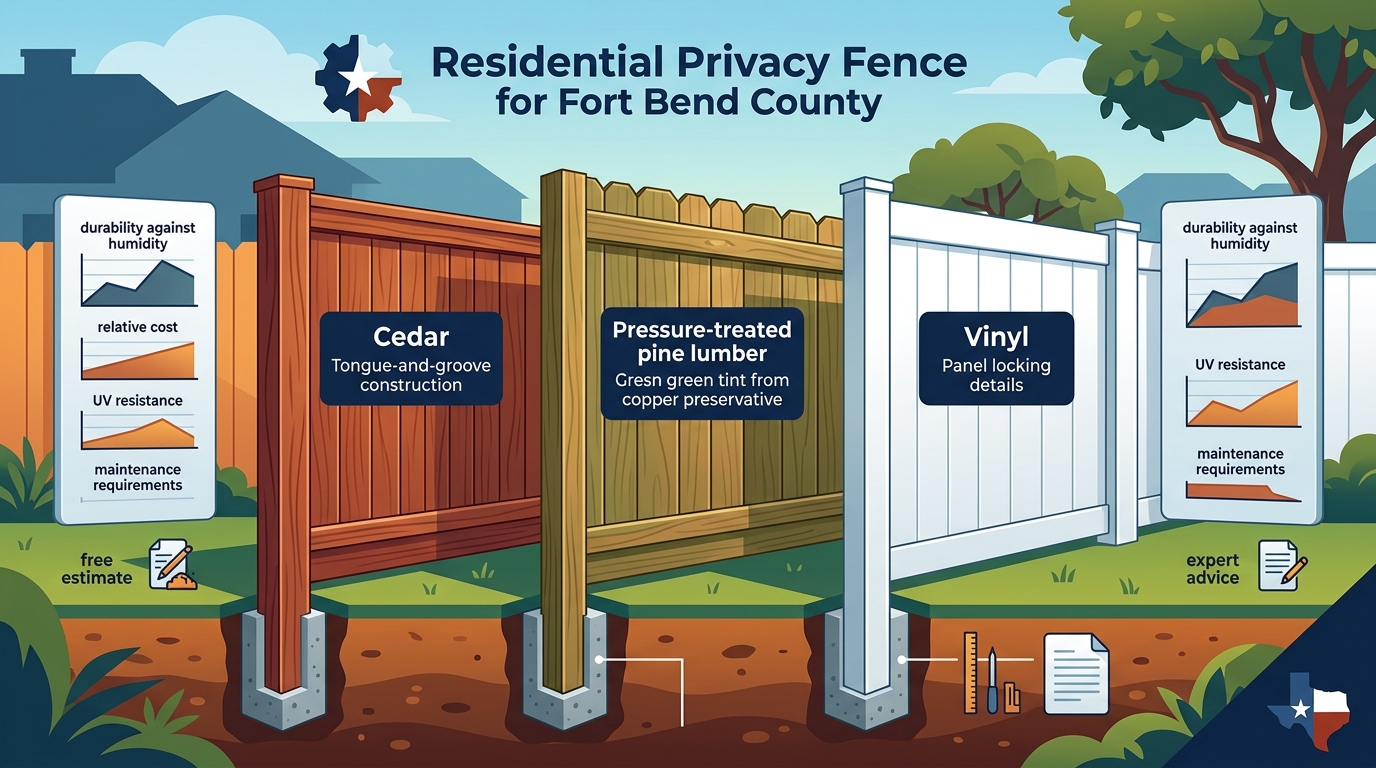
Vinyl fences offer superior durability in humid environments. They are easy to clean with soap and water and do not splinter or rust. The material is consistent in color and texture, providing a uniform appearance. Vinyl is also a good insulator, which can help reduce energy costs around the perimeter of your home.
Disadvantages of Vinyl
Vinyl fencing is typically more expensive than wood upfront. It can become brittle in extreme cold, although this is less of a concern in Fort Bend County. Heavy impacts can cause vinyl to crack or break, which may require professional repair. The material is less customizable than wood, as it is usually manufactured in standard panel sizes.
Cedar Wood
Cedar wood is a premium softwood known for its natural resistance to decay and insects. It is a popular choice for privacy fences in Fort Bend County due to its durability and attractive grain. Cedar contains natural oils that repel moisture and deter termites, reducing the need for chemical treatments. The wood has a warm, reddish-brown color that weathers to a silver-gray over time.
Advantages of Cedar
Cedar is naturally resistant to rot and insect damage, making it ideal for the Texas climate. It has a pleasant aroma that many homeowners find appealing. The wood is lightweight and easy to work with, which can reduce installation costs. Cedar fences often require less frequent maintenance than other wood species.
Disadvantages of Cedar
Cedar is more expensive than pressure-treated lumber or pine. It is softer than hardwoods, making it more susceptible to dents and scratches. The natural color of cedar can fade over time, requiring staining to maintain its appearance. Availability of high-quality cedar can vary, so it is important to source from reputable suppliers.
Pressure Treated Lumber
Pressure treated lumber is wood that has been infused with chemical preservatives to protect against rot, decay, and insect damage. It is a cost-effective option for privacy fences in Fort Bend County. The treatment process involves placing the wood in a vacuum chamber and forcing preservatives into the fibers. This makes the wood highly durable and suitable for ground contact.
Advantages of Pressure Treated Lumber
Disadvantages of Pressure Treated Lumber
Pressure treated lumber can have a greenish tint that fades over time. It may contain chemicals that some homeowners prefer to avoid, although modern treatments are generally safe. The wood can warp or crack if not properly maintained. Staining or sealing is recommended to protect the wood and enhance its appearance.
Composite Fencing
Advantages of Composite
Composite fences are highly durable and low-maintenance. They are resistant to rot, insects, and moisture, making them ideal for the Texas climate. The material is consistent in color and texture, providing a uniform appearance. Composite fences are also environmentally friendly, as they are often made from recycled materials.
Disadvantages of Composite
Local HOA Regulations
Homeowners associations (HOAs) in Fort Bend County often have specific regulations regarding fence materials, heights, and colors. It is essential to review your HOA guidelines before selecting a fence material. Some HOAs may restrict the use of certain materials, such as vinyl or composite, or limit the height of privacy fences. Violating HOA regulations can result in fines or required modifications.
Common HOA Restrictions
HOAs may require fences to be a specific color, such as white or tan. They may limit the height of privacy fences to six feet or less. Some HOAs may prohibit the use of chain link or ornamental metal fences in certain areas. It is important to obtain written approval from your HOA before beginning any fence installation project.
How to Comply with HOA Rules
Review your HOA's architectural guidelines carefully to understand the specific requirements for fences. Contact your HOA board or architectural review committee to ask questions and obtain approval for your proposed fence design. Keep a copy of all approvals and permits for your records. Working with a professional installer who is familiar with local HOA regulations can help ensure compliance.
Key Takeaways
- Vinyl fencing is a low-maintenance option that is resistant to rot and insects, making it ideal for humid climates.
- Cedar wood is a premium softwood with natural resistance to decay and insects, offering durability and an attractive grain.
- Pressure treated lumber is a cost-effective option that is highly resistant to rot and insect damage.
- Composite fencing is a premium option that combines the look of wood with the durability of vinyl, but it is the most expensive upfront.
- HOA regulations in Fort Bend County may restrict fence materials, heights, and colors, so it is essential to review guidelines before installation.
- Choosing the right fence material depends on your budget, maintenance preferences, and local regulations.
- Working with a professional installer can help ensure that your fence is installed correctly and complies with local codes and HOA rules.
Frequently Asked Questions
What is the most durable fence material for Fort Bend County?
Vinyl and composite fencing are generally the most durable options for Fort Bend County due to their resistance to rot, insects, and moisture. Cedar wood is also a durable choice, as it has natural resistance to decay and insects.
How much does a privacy fence cost in Fort Bend County?
The cost of a privacy fence in Fort Bend County varies depending on the material, height, and length of the fence. Wood fences are typically the most affordable, while vinyl and composite fences are more expensive. It is best to get multiple quotes from professional installers to compare prices.
Do I need a permit to install a fence in Fort Bend County?
Permit requirements for fence installation in Fort Bend County depend on the height and location of the fence. It is best to check with the local building department to determine if a permit is required for your specific project.
How long does a wood fence last in Fort Bend County?
A well-maintained wood fence in Fort Bend County can last 15 to 20 years. Regular staining or sealing and prompt repair of damaged sections can extend the life of the fence.
How long does a vinyl fence last in Fort Bend County?
A vinyl fence in Fort Bend County can last 20 to 30 years or more. Vinyl is resistant to rot, insects, and moisture, making it a durable choice for the Texas climate.
Can I paint a vinyl fence?
It is not recommended to paint a vinyl fence, as paint can peel or crack over time. If you want to change the color of your vinyl fence, it is best to replace the panels with a different color.
How do I maintain a cedar fence?
To maintain a cedar fence, clean it with a mild detergent and water, and apply a stain or sealant every two to three years. Promptly repair any damaged sections to prevent further deterioration.
How do I maintain a pressure treated fence?
To maintain a pressure treated fence, clean it with a mild detergent and water, and apply a stain or sealant every two to three years. Promptly repair any damaged sections to prevent further deterioration.
How do I maintain a composite fence?
To maintain a composite fence, clean it with a mild detergent and water. Composite fences do not require staining or sealing, but they may need to be cleaned more frequently to remove dirt and debris.
What is the best fence material for privacy?
The best fence material for privacy depends on your budget, maintenance preferences, and local regulations. Wood, vinyl, and composite are all excellent options for privacy, each offering distinct advantages.
Conclusion
Selecting the right privacy fence material for your Fort Bend County home is a significant investment in your property's value and your family's comfort. By understanding the pros and cons of wood, vinyl, cedar, pressure treated lumber, and composite fencing, you can make a decision that aligns with your budget and lifestyle. Remember to check local HOA regulations and building codes before beginning your project. For expert advice and professional installation, consider reaching out to Superior Fence Services for a free estimate and personalized guidance.