
How to Choose a Quality Fence
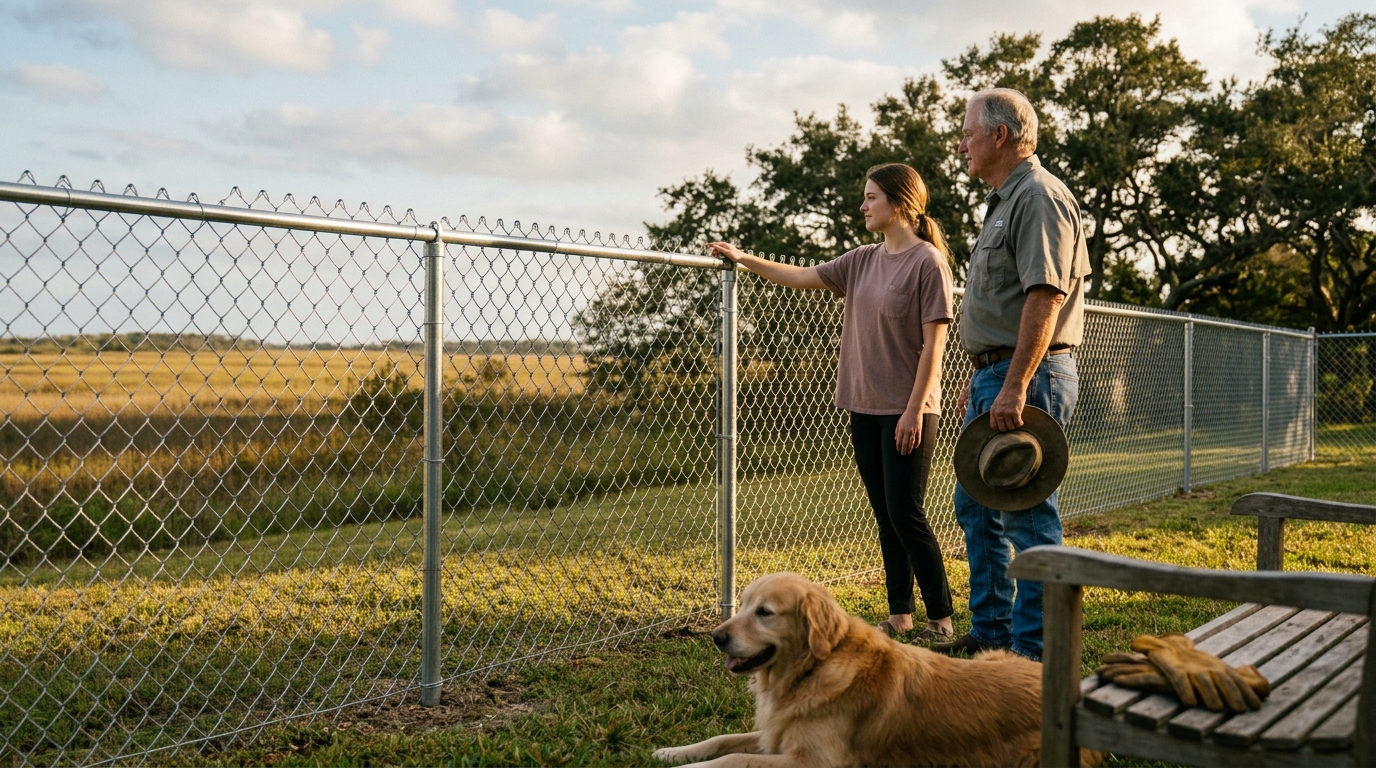
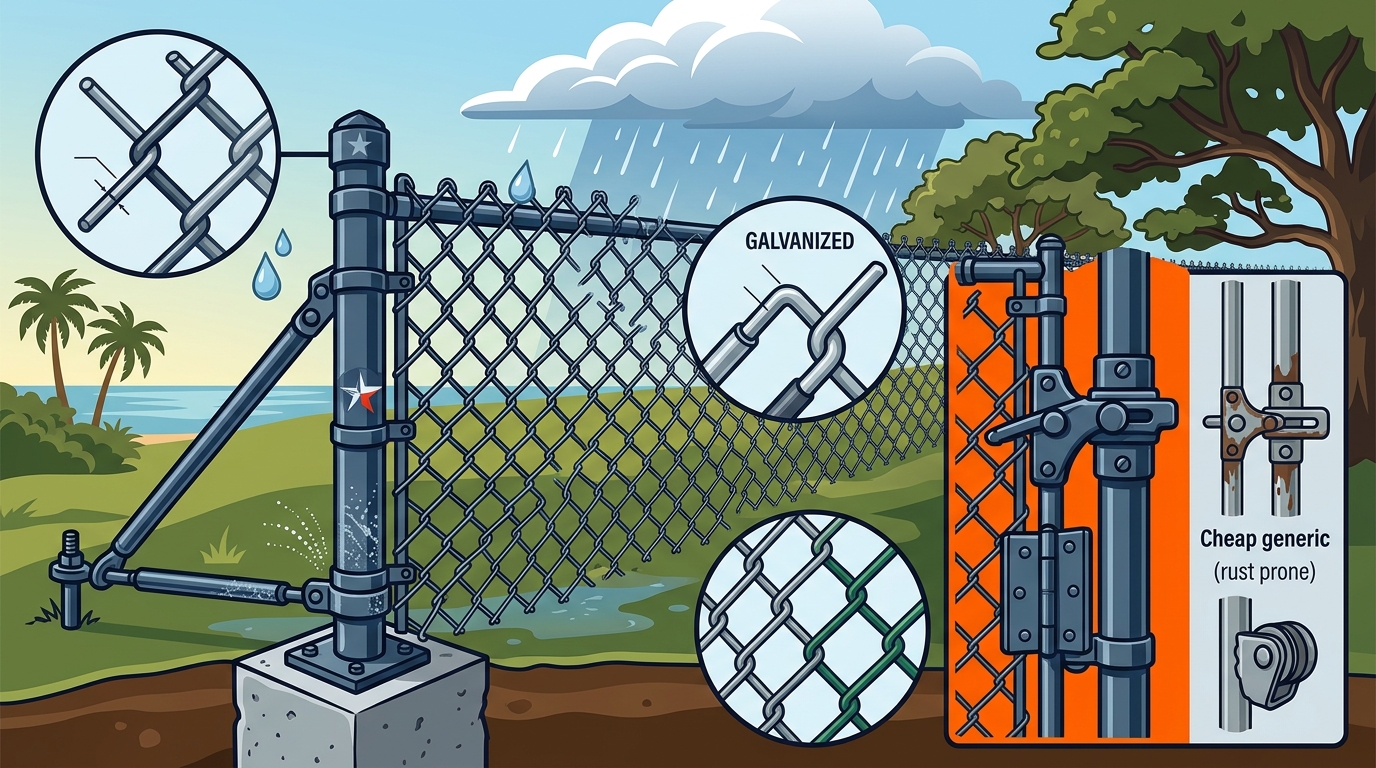
Choosing the right fence requires looking beyond the sticker price. A quality fence is defined by the gauge of the wire, the type of coating, and the quality of the hardware. In southeast Texas, the environment is harsh on materials. Salt air, humidity, and heavy rains demand durable components. A cheap fence may look fine on day one but will rust and sag within three years.
Wire Gauge and Coating
Hardware Quality
The posts and caps matter as much as the mesh. Steel posts are standard, but the thickness of the steel and the quality of the concrete footing determine longevity. In sandy soils common in Brazoria County, proper post depth is essential to prevent leaning. A reputable installer will use heavy-duty steel posts and ensure adequate concrete depth to anchor the structure against wind and soil shift.
What to Ask Before Committing
Before signing a contract, you must ask specific questions to protect your investment. Vague answers are a red flag. You need clarity on materials, labor, and warranty. Asking these questions helps you compare quotes from different providers accurately.
Material Specifications
Ask for the exact gauge of the wire and the type of coating. Is it galvanized or vinyl-coated? What is the mesh size? Standard is 1-inch by 1-inch, but smaller meshes are available for security. Ask about the post material. Are they steel or wood? If steel, what is the diameter and wall thickness? These details directly impact the price and durability.
Labor and Warranty
Ask who will perform the installation. Is it the company's own crew or subcontractors? Ask about the workmanship warranty. A standard warranty covers installation errors for one year. Ask what is excluded. Most warranties do not cover damage from weather, animals, or misuse. Clarify the payment schedule. Avoid paying 100% upfront. A standard schedule is 50% down and 50% upon completion.
How to Verify Credentials
Verifying a contractor's credentials is essential in the Texas fencing industry. Many operators are unlicensed or uninsured. You must confirm that the company is legitimate and protected. This step protects you from liability and ensures the work meets local standards.
Insurance and Licensing
Request a certificate of insurance. The company should carry general liability insurance and workers' compensation. If a worker is injured on your property and the company lacks workers' comp, you could be liable. Verify the insurance policy number with the provider. In Texas, fencing contractors are not required to hold a state license, but they must be bonded and insured. Check for a Texas Department of Insurance license if they claim to be licensed.
References and Reviews
Ask for three recent references in your area. Call them and ask about the quality of work, communication, and cleanup. Check online reviews on independent platforms. Look for patterns in complaints. If multiple reviews mention rusting or sagging, avoid that company. A reputable company like Superior Fence Services will provide transparent references and proof of insurance.
The Installation Process
Understanding the installation process helps you set realistic expectations. The process follows a logical sequence from measurement to final inspection. Each step is critical to the fence's longevity. Knowing the timeline helps you plan around the project.
Measurement and Design
The process begins with a site visit. The installer measures the property and identifies obstacles like trees, slopes, or utilities. They will mark the line for the fence. This step ensures the fence follows property lines and avoids underground utilities. Call 811 before any digging to mark utility lines. This is a legal requirement in Texas.
Post Setting and Mesh Installation
Posts are set first. Holes are dug to a depth of 2.5 to 3 feet. Concrete is poured to anchor the posts. The posts must be plumb and level. Once the concrete cures, the chain link mesh is unrolled and attached to the posts. Tension wires are installed to keep the mesh tight. Gates are installed last. The entire process for a standard residential fence takes 2 to 3 days.
Detailed Cost Breakdown
Height and Gauge
Height is the primary cost driver. A 4-foot fence is the cheapest. A 6-foot fence costs more due to more material and labor. 9-gauge wire costs more than 11-gauge. Vinyl coating adds to the cost compared to plain galvanized. The table below summarizes typical costs.
| Fence Type | Height | Cost per Linear Foot | Notes |
|---|
Gates and Accessories
Common Mistakes to Avoid
Homeowners often make mistakes that lead to poor results. Avoiding these pitfalls saves money and frustration. The most common errors involve underestimating costs and choosing the wrong materials.
Underestimating Length
Measure the fence line twice. Slopes and curves add length. If you underestimate, you will need to buy more material later. This is more expensive than buying enough initially. Ask the installer to provide a detailed measurement report.
Ignoring Soil Conditions
Chain Link vs. Alternatives
Chain link is not the only option. Comparing it to alternatives helps you choose the right fence for your needs. Each type has different costs and benefits.
Vinyl Fencing
Wood Fencing
Costs for Specific Situations
Specific situations affect the cost. Understanding these factors helps you plan. The base price per foot changes based on the project scope.
Commercial Properties
Sloped Terrain
Local Rules and Protections
Local regulations affect what you can build. Understanding these rules prevents fines and rework. Texas has specific fencing laws that apply to residential and commercial properties.
Property Lines
You must build on your property line. Building on a neighbor's property is illegal. Get a survey if you are unsure of your boundaries. Disputes over fence placement are common. A survey resolves them before construction begins.
Height Restrictions
Most Texas municipalities limit residential fence height to 6 feet. Some areas allow 7 feet. Check your local zoning code. Exceeding the limit can result in a fine or forced removal. Commercial areas may have different rules.
Southeast Texas Local Factors
Southeast Texas has unique environmental factors. These factors impact fence durability and cost. Understanding them helps you choose the right materials.
Humidity and Salt Air
The coastal areas of Brazoria and Matagorda counties have high humidity and salt air. This accelerates rust. Vinyl-coated chain link is recommended for coastal properties. Galvanized steel may rust faster in these areas. Choose materials that resist corrosion.
Soil Type
Sandy soil is common in the region. It requires deeper post setting. Concrete anchors are essential. Ensure your installer is experienced with sandy soils. They will know the correct depth and concrete mix.
Timing Your Project
Timing affects cost and availability. Scheduling your project at the right time saves money. The fencing industry has seasonal peaks.
Seasonal Demand
Spring and fall are peak seasons. Demand is high, and prices may increase. Scheduling in winter or early spring can save 10% to 15%. Contractors have more availability. You may also get better service. Plan ahead to secure a slot.
Weather Considerations
Heavy rains can delay installation. Concrete needs dry weather to cure properly. If you schedule during the rainy season, expect potential delays. Build a buffer into your timeline.
Long-Term Results
A well-installed chain link fence lasts 15 to 20 years. Proper maintenance extends its life. Understanding the long-term results helps you justify the investment.
Maintenance Requirements
Chain link requires minimal maintenance. Inspect it annually for rust or loose wires. Tighten tension wires if needed. Clean the mesh with water to remove dirt. Vinyl-coated fences require less maintenance than galvanized. They resist rust and fading.
Resale Value
A new fence increases property value. It enhances curb appeal and security. Buyers often view a new fence as a positive feature. It can add 1% to 3% to your home's value. This is a modest but real return on investment.
Key Takeaways
- Always verify contractor insurance and licensing before signing a contract.
- Post depth is critical in sandy soils to prevent leaning.
- Gates and automatic operators add significant cost to the total project.
- Scheduling in off-peak seasons can save 10% to 15% on labor costs.
- Local humidity and salt air require durable materials in coastal areas.
- A well-installed fence lasts 15 to 20 years with minimal maintenance.
Frequently Asked Questions
How much does a 6-foot chain link fence cost in Texas?
Is vinyl-coated chain link worth the extra cost?
How long does installation take?
Installation takes 2 to 3 days for a standard residential fence. Larger commercial projects may take longer. Weather can cause delays.
Do I need a permit for a fence in Texas?
Most residential fences do not require a permit. However, you must follow local height and setback rules. Check with your municipality to be sure.
What is the best fence for sandy soil?
Can I install a chain link fence myself?
Yes, but it is labor-intensive. You need the right tools and experience. Professional installation ensures proper tension and post alignment. DIY may save money but risks poor results.