
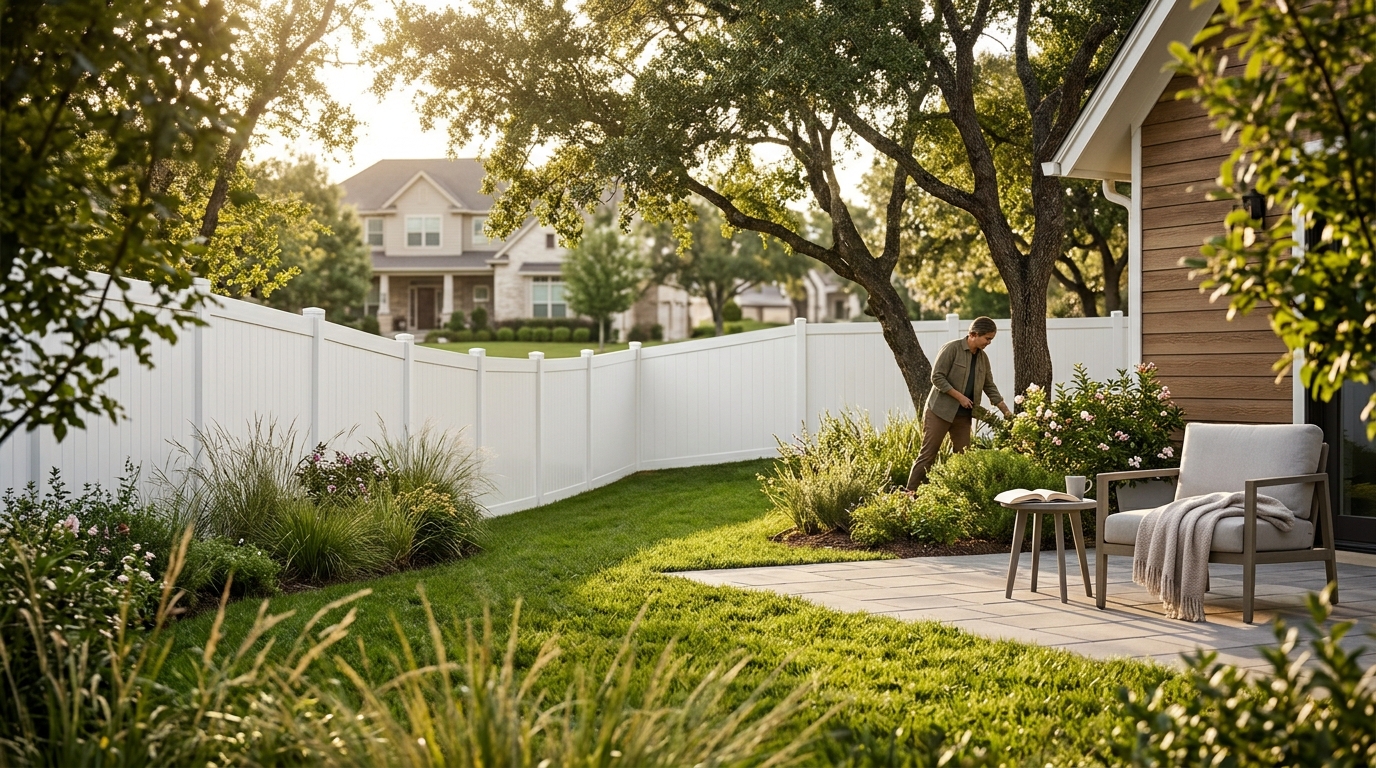
Vinyl fencing typically lasts between 20 and 30 years on residential properties when properly installed and maintained. This lifespan is significantly longer than traditional wood fencing, which often requires replacement or extensive repair within 10 to 15 years. The durability of vinyl fencing depends on material quality, installation standards, and local weather conditions. Superior Fence Services provides expert installation to ensure your vinyl fence achieves its maximum potential lifespan in the Texas climate.
Material Composition and Weather Resistance
Vinyl fencing is a synthetic material made from polyvinyl chloride (PVC) reinforced with calcium carbonate. This composition makes the material inherently resistant to rot, warping, and insect damage. Unlike wood, vinyl does not absorb moisture, which prevents the swelling and shrinking that leads to structural failure over time. In the humid climate of Brazoria County, this moisture resistance is a critical factor in long-term durability.
When selecting vinyl fencing, it is important to consider the specific formulation used by the manufacturer. Not all vinyl is created equal, and lower-grade materials may lack sufficient UV protection or reinforcement. A professional installer can advise on the best material options for your specific location and usage needs.
The Critical Role of Professional Installation
Even the highest quality vinyl fencing will fail prematurely if installed incorrectly. Proper installation involves setting posts in concrete or using appropriate post sleeves to ensure stability. The spacing between posts must be precise to prevent sagging or bowing under wind load. Superior Fence Services brings over 30 years of experience to every installation, ensuring that each fence is built to last.
One common installation error is failing to account for thermal expansion. Vinyl expands in heat and contracts in cold. If panels are installed too tightly, they can buckle in the summer heat. Professional installers leave the correct amount of clearance between panels and posts to accommodate this movement. This simple detail can extend the life of your fence by many years.
Maintenance Requirements for Longevity
Vinyl fencing is often marketed as a low-maintenance option, and this is largely true. However, it is not entirely maintenance-free. Regular cleaning is the primary maintenance task required to keep vinyl fencing looking its best. Dirt, pollen, and debris can accumulate on the surface, trapping moisture and potentially leading to discoloration. A simple wash with mild soap and water once or twice a year is usually sufficient.
It is important to avoid using harsh chemicals or abrasive cleaners on vinyl fencing. These can damage the surface and strip away UV stabilizers. Pressure washing can also be harmful if used at too high a setting, as it can crack or deform the material. A soft brush and gentle water pressure are the safest cleaning methods. Regular inspection for loose fasteners or damaged panels is also recommended.
While vinyl does not require painting or staining, it can be scratched by sharp objects or pets. Minor scratches can often be repaired with a vinyl repair kit, but deep scratches may require panel replacement. Keeping pets and children away from the fence can help prevent damage. Overall, the maintenance required for vinyl fencing is minimal compared to wood, which needs regular staining, sealing, and repair.
Impact of Texas Climate on Vinyl Durability
The Texas climate presents unique challenges for any outdoor material. High temperatures, intense UV exposure, and occasional severe weather can all affect fence durability. Vinyl fencing is well-suited to this environment, but it is not immune to damage. Extreme heat can cause vinyl to soften slightly, while cold snaps can make it more brittle. The material is designed to handle these fluctuations, but quality matters.
Hail and debris from storms can also damage vinyl fencing. While vinyl is more resistant to impact than wood, it can crack or shatter under severe hail. This is a rare occurrence, but it is something to consider when evaluating the long-term risk. Insurance may cover damage from severe weather, but it is important to check your policy. A durable, well-installed vinyl fence will provide reliable protection and privacy for decades.
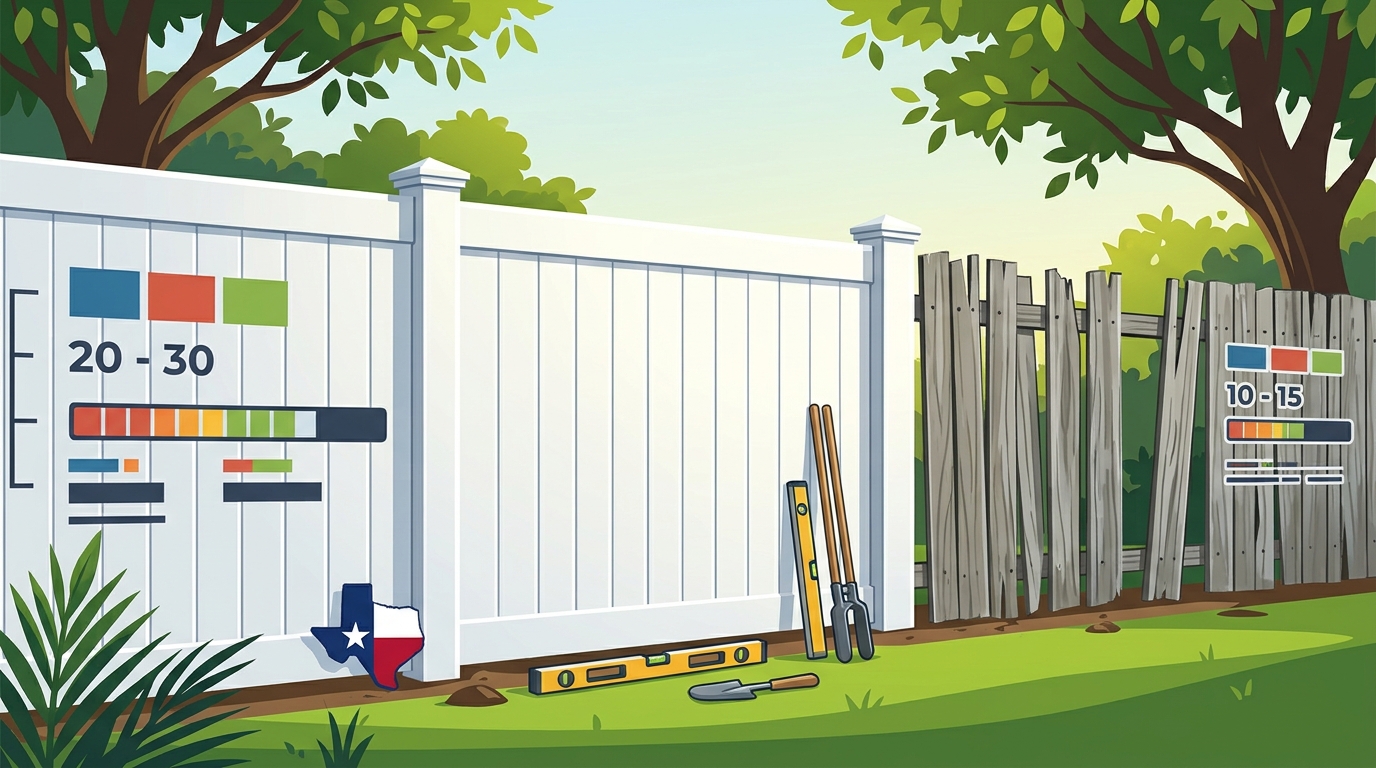
Vinyl vs. Wood: A Durability Comparison
When comparing vinyl to wood fencing, the lifespan difference is significant. Wood fencing typically lasts 10 to 15 years, depending on the species and maintenance. Cedar and redwood are more durable than pine, but all wood is susceptible to rot, insects, and weathering. Vinyl fencing, on the other hand, can last 20 to 30 years or more. This makes vinyl a more cost-effective option over the long term, despite its higher initial cost.
The maintenance difference is also substantial. Wood fencing requires regular staining or sealing to protect against moisture and UV damage. This is a time-consuming and costly task that must be repeated every few years. Vinyl fencing requires only occasional cleaning, saving homeowners time and money. The lack of maintenance is one of the primary reasons homeowners choose vinyl over wood.
Another advantage of vinyl is its consistency. Wood is a natural material, and its appearance can vary from board to board. Vinyl fencing is manufactured to uniform standards, ensuring a consistent look throughout the fence. This is particularly important for privacy fences, where a uniform appearance is desired. Vinyl also comes in a variety of colors and styles, allowing homeowners to match their fence to their home's exterior.
Key Takeaways
- Vinyl fencing typically lasts 20 to 30 years on residential properties.
- Regular cleaning with mild soap and water is the primary maintenance task.
- The Texas climate requires UV-stabilized vinyl and proper wind resistance design.
Vinyl fencing is more durable and lower maintenance than wood fencing.
- High-quality hardware and correct panel spacing are essential for long-term stability.
Professional installation is critical for achieving maximum fence lifespan.
Avoid harsh chemicals and high-pressure washing to prevent surface damage.
Frequently Asked Questions
How long does vinyl fencing last in Texas?
Vinyl fencing in Texas typically lasts 20 to 30 years. The intense sun and heat require UV-stabilized materials, but high-quality vinyl is designed to handle these conditions. Proper installation and occasional cleaning will help ensure your fence lasts for decades.
Does vinyl fencing need to be painted or stained?
No, vinyl fencing does not need to be painted or stained. The color is integrated into the material during manufacturing, so it will not peel or fade like paint. This is one of the main advantages of vinyl over wood fencing.
Can vinyl fencing be damaged by hail?
Yes, severe hail can crack or shatter vinyl fencing. While vinyl is more resistant to impact than wood, it is not indestructible. If you live in an area prone to severe hail, consider this when evaluating the long-term risk. Insurance may cover damage from severe weather.
How often should I clean my vinyl fence?
You should clean your vinyl fence once or twice a year. A simple wash with mild soap and water is usually sufficient. Avoid using harsh chemicals or high-pressure washing, as these can damage the surface. Regular cleaning helps prevent dirt buildup and discoloration.
Is vinyl fencing more expensive than wood?
Vinyl fencing is typically more expensive than wood fencing upfront. However, it is more cost-effective over the long term due to its longer lifespan and lower maintenance requirements. Wood fencing requires regular staining and repair, which adds to the total cost of ownership.
Can I repair a cracked vinyl fence panel?
Minor cracks can often be repaired with a vinyl repair kit. Deep cracks or shattering may require panel replacement. A professional installer can assess the damage and recommend the best repair option. Keeping pets and children away from the fence can help prevent damage.
Conclusion
Vinyl fencing is a durable, low-maintenance option for residential properties in Texas. When properly installed and maintained, it can last 20 to 30 years or more. The key to achieving this lifespan is professional installation and regular cleaning. Superior Fence Services offers free estimates and expert installation for vinyl fencing in Brazoria County and surrounding areas. Contact us today to learn more about how we can help you choose the right fence for your property.