
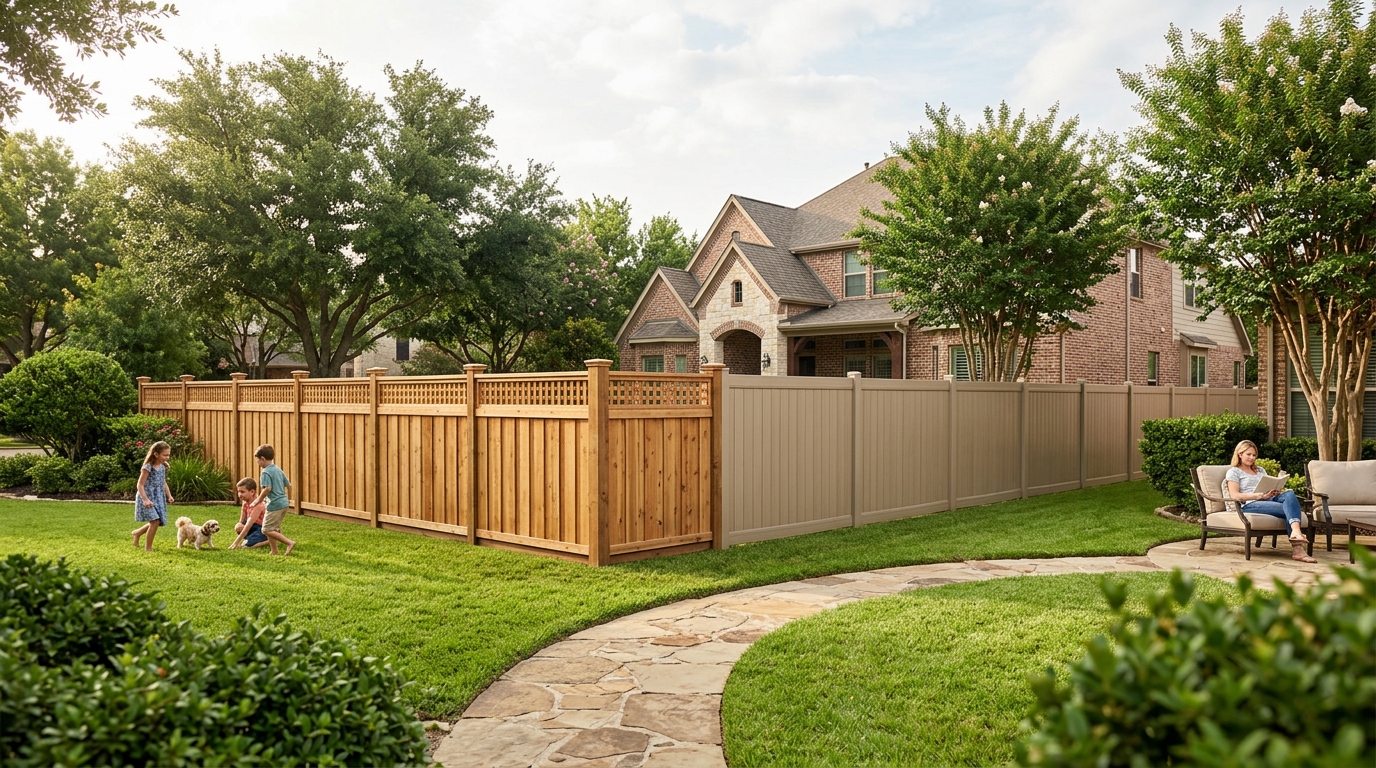
Fort Bend County homeowners face unique environmental challenges that dictate fence longevity. According to National Weather Service data, the region experiences high humidity and periodic severe storms that degrade inferior materials rapidly. Choosing the right privacy fence is not merely an aesthetic decision but a structural investment against Texas weather. This guide analyzes the top materials available for residential properties in Sugar Land, Richmond, and Missouri City.
Vinyl Fencing: Durability and Maintenance
Vinyl fencing has become the dominant choice for privacy in Fort Bend County due to its resistance to moisture and pests. Unlike wood, vinyl does not rot, warp, or splinter when exposed to the humid subtropical climate typical of the Gulf Coast region. This material requires minimal maintenance, eliminating the need for annual staining or sealing that homeowners often neglect.
Vinyl is a synthetic polymer material designed for long-term outdoor durability. High-quality vinyl panels resist fading from UV exposure, a critical factor in Texas where sunlight intensity is high. While the initial installation cost is higher than pressure-treated pine, the lifecycle cost is significantly lower. Homeowners save thousands over ten years by avoiding paint, stain, and repair costs associated with organic materials.
For those seeking a clean, uniform look, vinyl offers consistent coloration throughout the panel. This means scratches are less visible than on painted wood. Superior Fences provides premium vinyl installations tailored to local zoning requirements. The material also does not attract termites or carpenter ants, which are prevalent in the area.
Wood Fencing: Natural Aesthetics and Upkeep
Wood remains the most popular choice for homeowners prioritizing natural beauty and customization. Cedar and pressure-treated pine are the standard materials for privacy fences in Fort Bend County. Cedar contains natural oils that repel insects and resist decay, making it a superior choice for humid environments compared to standard pine.
Wood is a natural organic material harvested from trees for construction purposes. It offers a classic, warm appearance that vinyl and composite materials struggle to replicate authentically. However, wood requires rigorous maintenance to survive the Texas climate. Without regular sealing, wood absorbs moisture, leading to swelling, warping, and eventual rot.
Pressure-treated pine is more affordable than cedar but requires chemical treatment to resist rot and insects. This treatment is essential for longevity in Fort Bend County's soil conditions. Homeowners must commit to a maintenance schedule of staining or sealing every two to three years. Proper fence maintenance guides emphasize the importance of inspecting posts for rot annually.
Wood Species Comparison
Cedar offers better natural resistance but comes at a premium price. Pressure-treated pine is budget-friendly but demands more labor. Redwood is durable but often prohibitively expensive and less available in local supply chains. Homeowners must weigh aesthetic desires against long-term upkeep responsibilities.
Composite Fencing: The Hybrid Solution
Composite fencing blends wood fibers with plastic polymers to create a material that mimics wood while resisting rot. This option appeals to homeowners who want the look of wood without the high maintenance burden. Composite materials are engineered to withstand moisture, UV rays, and insect damage.
Composite is a manufactured building material combining wood flour and plastic resins. It offers a middle ground between the high maintenance of wood and the synthetic appearance of vinyl. While durable, composite can be susceptible to staining from organic matter like leaves or grass clippings if not cleaned regularly.
The cost of composite fencing is typically higher than vinyl and significantly higher than pressure-treated wood. However, it offers a unique aesthetic that stands out in residential neighborhoods. View our composite fence portfolio to see how this material performs in local installations. The material is also environmentally friendly as it often utilizes recycled plastics and wood waste.
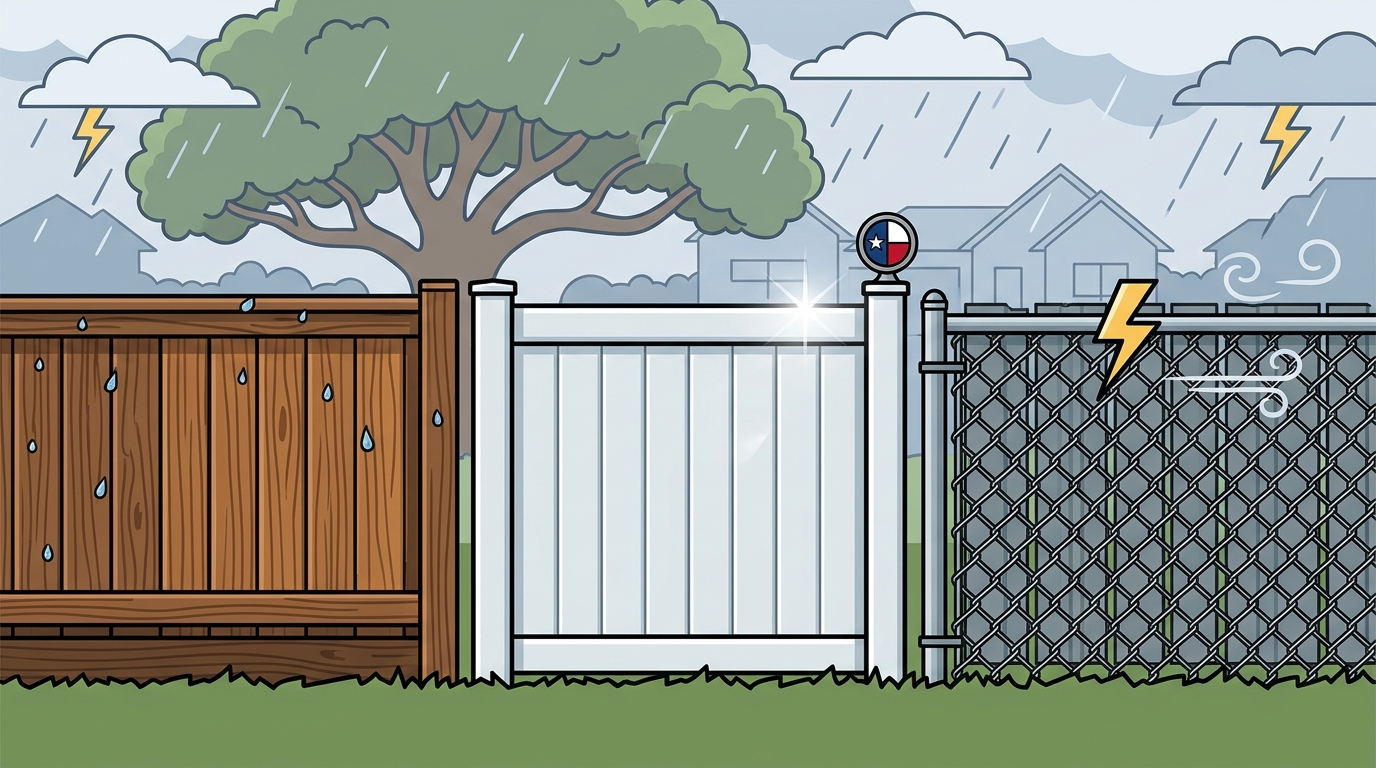
Metal and Aluminum Privacy Options
While metal fencing is often associated with open designs, modern aluminum and steel options provide full privacy. Powder-coated aluminum is lightweight, rust-resistant, and requires virtually no maintenance. Steel fences offer superior strength and security but must be properly coated to prevent rust in humid conditions.
Aluminum is a lightweight metal alloy resistant to corrosion and rust. It is an excellent choice for homeowners who want durability without the weight of steel. Powder coating adds an extra layer of protection against the elements and allows for custom color matching to home exteriors.
Steel privacy fences are heavier and more expensive but offer unmatched security. They are ideal for properties bordering larger lots or requiring high security. Explore our metal fencing services for detailed specifications on gauge and coating options. Both materials outlast wood in terms of structural integrity against weather events.
Comparative Analysis of Materials
Selecting the right material depends on budget, aesthetic preference, and maintenance willingness. The following table summarizes the key differences between the primary privacy fence materials available in Fort Bend County.
| Material | Initial Cost | Maintenance Level | Lifespan | Best For |
|---|---|---|---|---|
| Vinyl | Medium-High | Low | 20-30+ Years | Low upkeep, clean look |
| Cedar Wood | Medium | High | 10-15 Years | Natural aesthetics |
| Pressure-Treated Pine | Low | High | 10-12 Years | Budget-conscious projects |
| Composite | High | Medium | 25-30 Years | Wood look, low rot |
| Aluminum/Steel | Medium-High | Low | 20+ Years | Security and durability |
Data from industry reports indicates that vinyl and composite fences retain their value better over time due to lower repair needs. Wood fences may increase curb appeal initially but depreciate faster if maintenance is neglected. Home inspection standards highlight the importance of post integrity in all fence types.
Key Takeaways
- Vinyl fencing offers the best balance of durability and low maintenance for Fort Bend County's humid climate.
- Cedar wood provides natural beauty but requires staining every two to three years to prevent rot.
- Composite fencing mimics wood appearance while resisting insect damage and moisture absorption.
- Aluminum privacy fences are rust-resistant and ideal for homeowners seeking modern aesthetics.
- Pressure-treated pine is the most affordable option but has the shortest lifespan without rigorous upkeep.
- Local zoning laws in Fort Bend County may dictate fence height and setback requirements.
- Professional installation ensures proper post depth to withstand Texas soil shifts and storms.
Frequently Asked Questions
What is the most durable fence material for Fort Bend County?
Vinyl and composite materials are considered the most durable due to their resistance to rot, insects, and moisture. They withstand the humid subtropical climate better than organic wood options.
How long does a cedar privacy fence last in Texas?
A well-maintained cedar fence typically lasts between 10 and 15 years. Without regular sealing, exposure to sun and rain can reduce this lifespan significantly.
Is composite fencing worth the higher cost?
For homeowners who desire the look of wood but want to avoid maintenance, composite is worth the investment. It offers a longer lifespan than wood with lower upkeep than vinyl.
Do I need a permit for a privacy fence in Fort Bend County?
Permit requirements vary by municipality within Fort Bend County. Cities like Sugar Land and Missouri City may have specific zoning ordinances regarding fence height and placement. Check local county regulations before starting your project.
Can I install a privacy fence on a slope?
Yes, privacy fences can be installed on slopes using stepped or racked methods. Vinyl and wood can both be adapted to uneven terrain with proper installation techniques.
What is the average cost of a privacy fence in Fort Bend County?
Costs vary by material and linear footage. Generally, pressure-treated pine is the most affordable, while composite and custom vinyl are premium options. HomeAdvisor estimates provide regional pricing benchmarks for planning purposes.
How do I protect my fence from storm damage?
Ensure posts are set deep enough in concrete to resist wind uplift. Regular inspections for loose panels or leaning posts help prevent catastrophic failure during severe weather events.
Contact Superior Fences
Choosing the right privacy fence is a critical decision for your Fort Bend County home. Superior Fences specializes in high-quality installations tailored to local environmental conditions. We offer expert guidance on material selection, design, and compliance with local regulations. Contact us today to schedule a consultation and transform your outdoor space.