
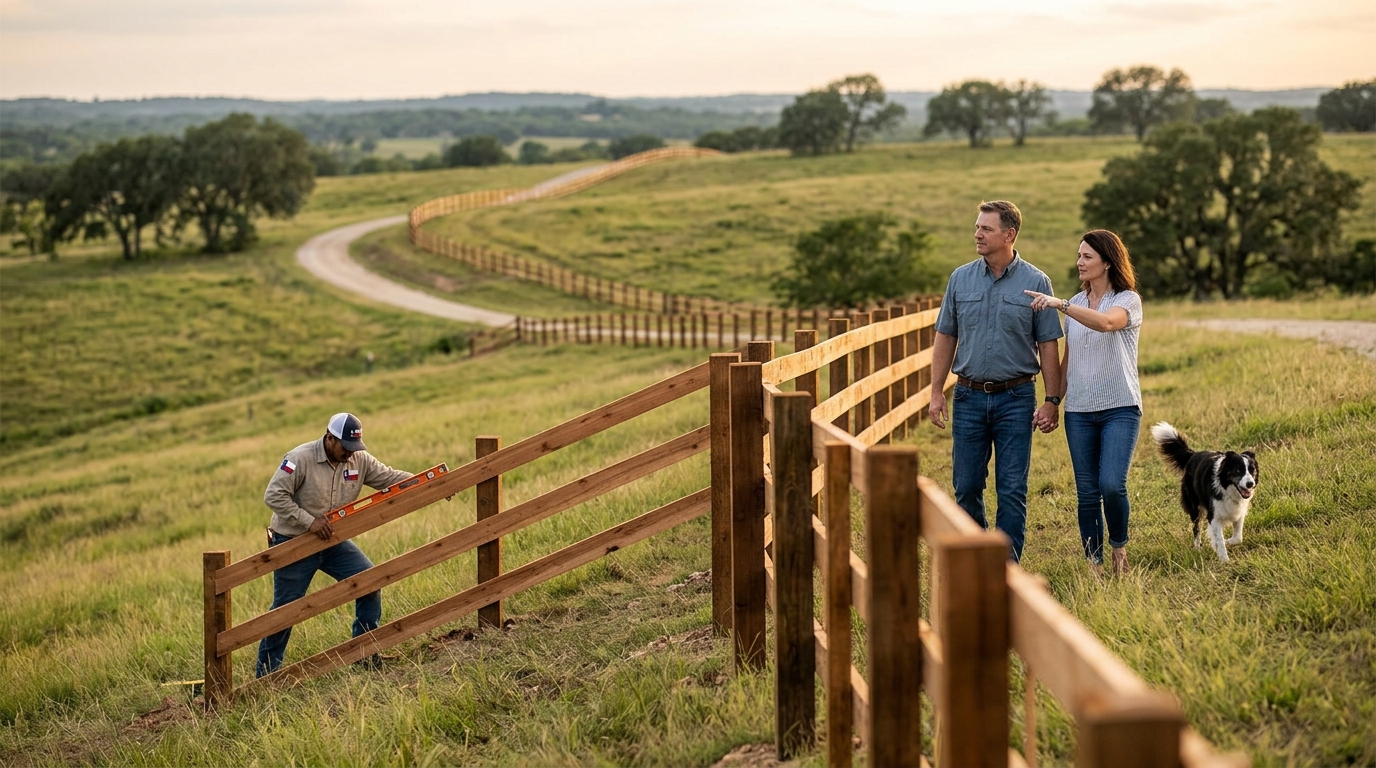
Fencing a large hilly property costs more than flat terrain due to increased labor, material waste, and complex post installation. Steep slopes require custom post depths and additional concrete to ensure stability. Terrain complexity directly drives up the total project price for homeowners in Texas.
Terrain and Slope Complexity
The physical shape of your land is the primary driver of fencing costs. A fence line that follows a steep hillside requires significantly more labor than a flat yard. Installers must dig deeper holes on the uphill side to anchor the posts securely. This process takes longer and requires specialized equipment. On very steep grades, standard post drivers may not work effectively. Crews often use manual digging or heavy machinery to set posts at the correct angle. This complexity increases the hourly labor rate for the project.
For example, a 4-foot slope over a 10-foot run creates a significant challenge for post alignment. The fence must remain level or follow the contour of the land. This requires precise measurement and adjustment for every single post. The more uneven the terrain, the more time the crew spends on each section. This directly impacts the final invoice.
Material Selection and Durability
Choosing the right material for hilly terrain is critical. You must consider how water will flow across your property. Materials that resist moisture are essential for longevity. Superior Fence Services offers a variety of materials including wood, vinyl, and chain link. They can help you select the best option for your specific terrain.
Post Installation and Foundation
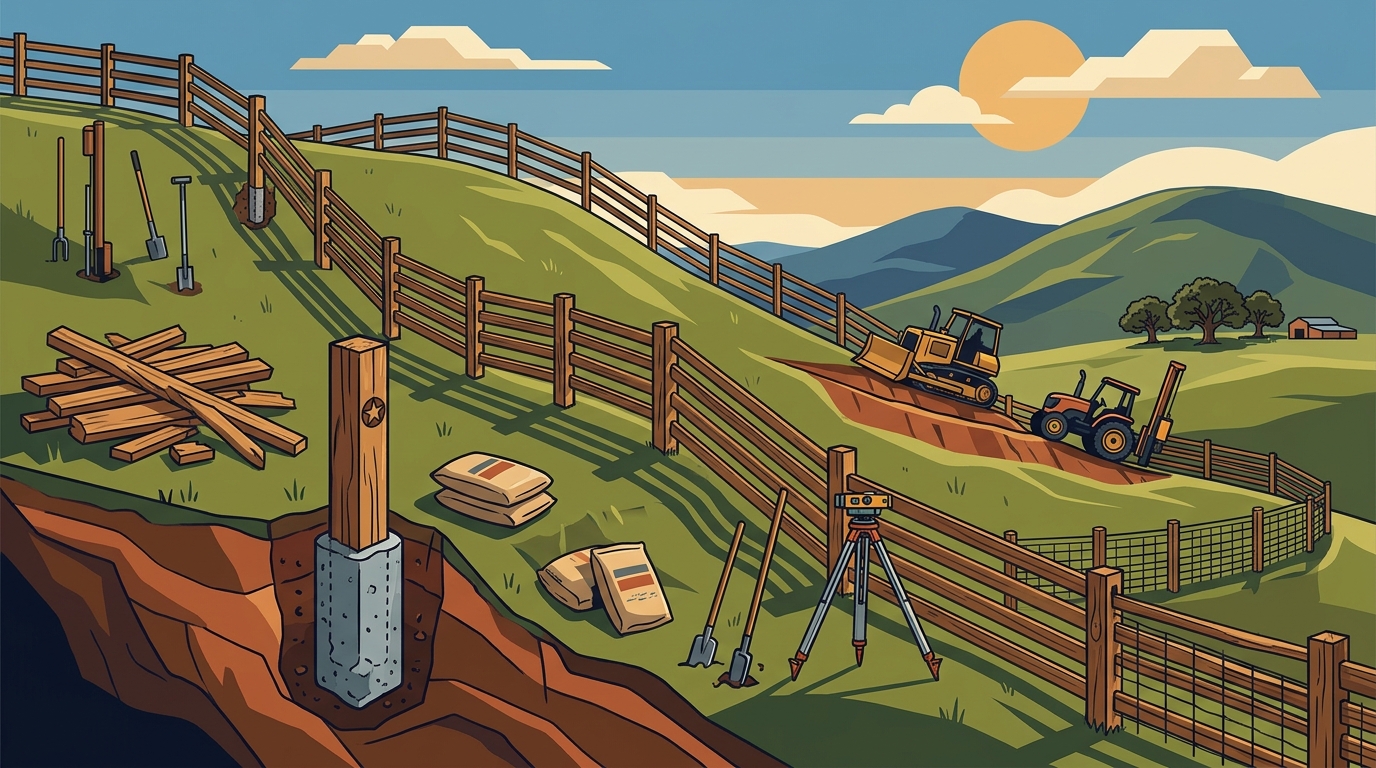
Post installation is the most labor-intensive part of fencing a hilly property. On flat ground, posts are typically set in concrete at a standard depth. On slopes, the post depth varies significantly. The uphill side of the post must be buried much deeper than the downhill side. This ensures the fence remains stable and does not lean. The concrete volume required for each post increases on slopes. This adds to the material cost. Additionally, the crew must ensure the fence line remains straight and level. This requires careful surveying and marking. Any errors in post placement can lead to a crooked fence or structural failure.
For large properties, the number of posts is substantial. Each post on a slope requires custom installation. This increases the total labor hours. The foundation of the fence is critical for its longevity. A poorly installed post on a slope will fail quickly. This leads to costly repairs down the line. Investing in proper post installation is essential.
Site Access and Logistics
The accessibility of your property affects the cost of fencing. Large hilly properties often have limited access points. Heavy equipment may not be able to reach all areas of the fence line. This requires manual labor to transport materials and tools. Manual labor is more expensive than using machinery. Additionally, the presence of trees, rocks, or other obstacles can slow down the installation process. Crews must navigate around these obstacles carefully. This increases the time required for the project. The logistics of moving materials across uneven terrain also add to the cost. Fuel and equipment wear and tear are factors to consider.
For example, a property with a steep, rocky hillside may require a crew to carry materials by hand. This is physically demanding and time-consuming. The cost of this manual labor is reflected in the final price. Planning for site access is an important part of the fencing process. It helps to identify potential challenges before the project begins.
Labor Costs and Professional Expertise
Labor is a significant portion of the total fencing cost. Professional installers charge for their time and expertise. Fencing a hilly property requires skilled labor. Installers must have experience working with uneven terrain. They must know how to adjust post depths and angles. They must also be able to work safely on slopes. This expertise commands a higher labor rate. DIY fencing on a hilly property is possible but challenging. It requires the right tools and skills. Without proper experience, the fence may not be stable or level. Hiring a professional ensures the job is done correctly. It also saves time and frustration.
When getting estimates, ask about the installer's experience with hilly terrain. Look for companies that specialize in complex projects. Superior Fence Services has over 30 years of experience in fence installation. They are well-equipped to handle the challenges of hilly properties. Their team is trained to work safely and efficiently on slopes.
Key Takeaways
- Terrain slope is the primary driver of increased fencing costs.
- Post installation on slopes requires deeper holes and more concrete.
- Material choice affects both upfront cost and long-term maintenance.
- Site access and logistics can significantly impact labor costs.
- Professional expertise is essential for safe and stable installation on slopes.
- Getting multiple estimates from experienced installers is recommended.
Frequently Asked Questions
Why is fencing a hilly property more expensive?
Fencing a hilly property is more expensive due to increased labor, material waste, and complex post installation. Steep slopes require custom post depths and additional concrete to ensure stability.
What is the most cost-effective fence material for hilly terrain?
Chain link is the most cost-effective material for hilly terrain. It is durable, requires minimal maintenance, and is easy to install on slopes.
How does slope affect post installation?
Slope affects post installation by requiring deeper holes on the uphill side. This ensures the fence remains stable and does not lean. The concrete volume required for each post also increases.
Can I install a fence on a hilly property myself?
Yes, but it is challenging. It requires the right tools and skills. Without proper experience, the fence may not be stable or level. Hiring a professional is recommended.
How much more does a hilly fence cost compared to a flat one?
The cost increase varies depending on the steepness of the slope and the size of the property. It can range from 10% to 50% or more.
What should I look for in a fencing contractor for hilly terrain?
Look for a contractor with experience working with uneven terrain. They should be able to provide examples of past projects on slopes. They should also be able to explain their approach to post installation on slopes.
Conclusion
Fencing a large hilly property requires careful planning and professional expertise. The cost is driven by terrain complexity, material choice, and labor. By understanding these factors, you can make informed decisions about your fencing project. Contact Superior Fence Services for a free estimate and expert advice on fencing your hilly property.