
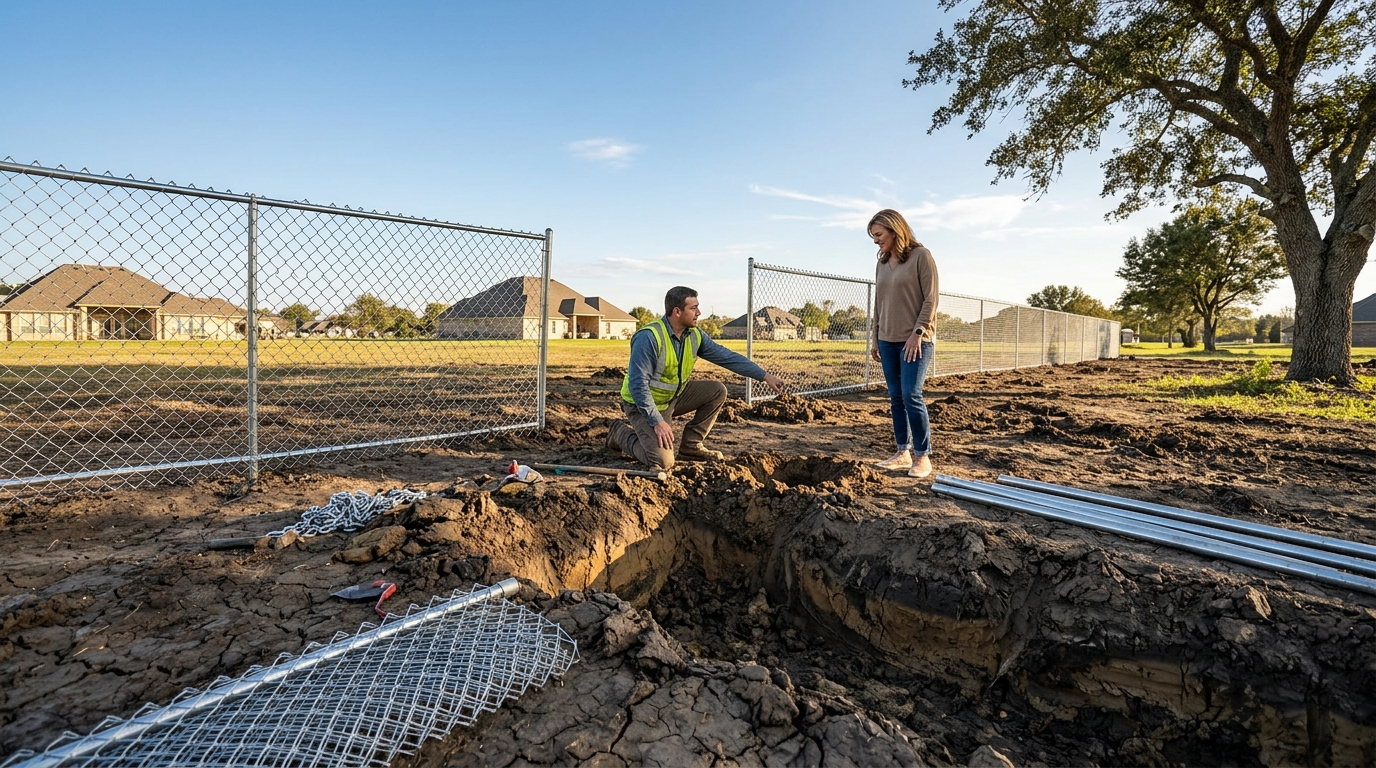
Soil composition in southeast Texas directly impacts chain link fence installation costs by dictating excavation depth, post material, and labor intensity. Expansive clays, high water tables, and sandy substrates require specific engineering solutions that standard estimates often overlook. Superior Fence Services addresses these regional variables to ensure structural integrity and accurate budgeting for your property.
Expansive Clay and Post Stability
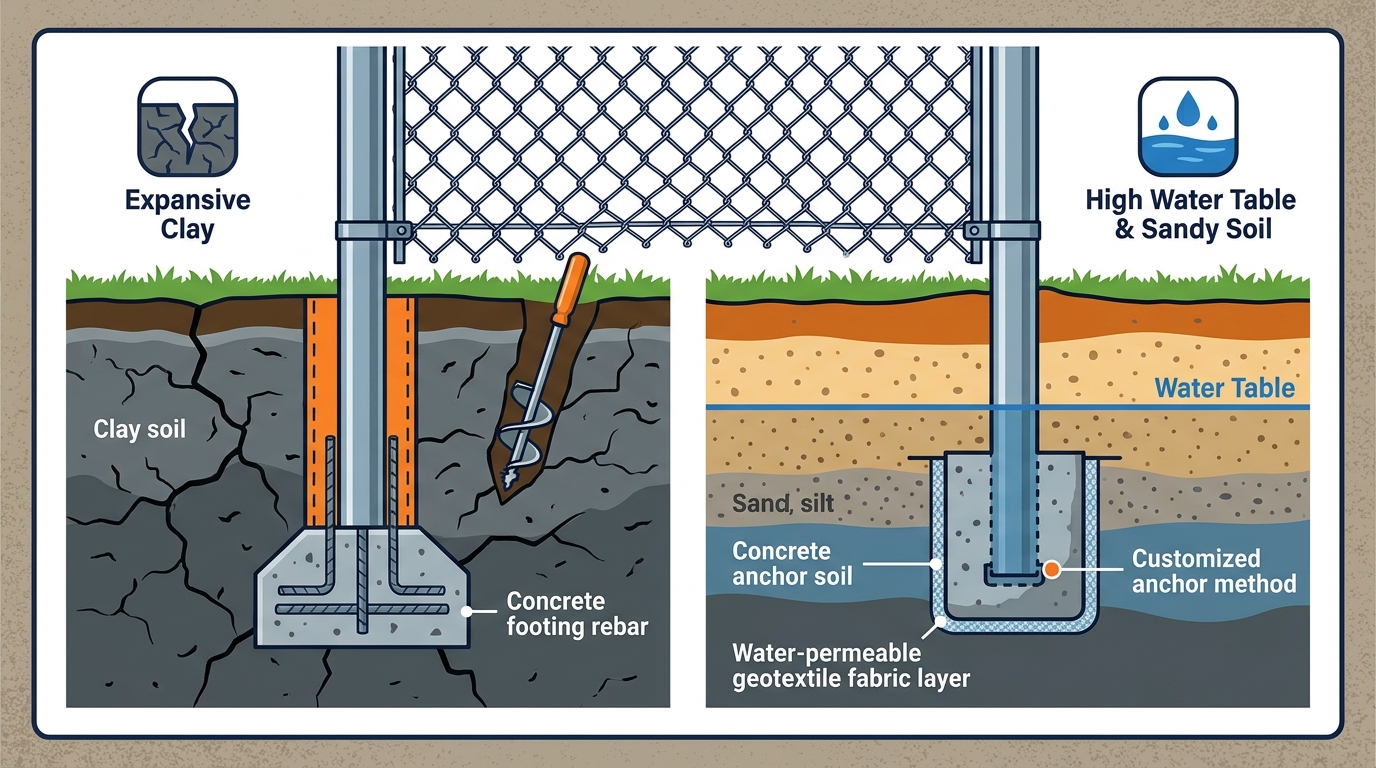
Expansive clay is a soil type that swells when wet and shrinks when dry, creating significant lateral pressure on fence posts. In Brazoria and Fort Bend counties, this soil behavior is the primary driver of post movement and fence line distortion over time. Standard concrete footings may crack or fail to anchor properly in these shifting conditions.
Installers must often use larger diameter posts or specialized anchoring systems to counteract the soil's expansion. This requirement increases material costs and labor time compared to stable soil types. Superior Fence Services evaluates soil moisture content and expansion potential during the site inspection phase to select the appropriate post depth and concrete mix.
Ignoring expansive clay risks a fence that leans or breaks within a few years. Proper engineering ensures the fence remains plumb and secure despite the soil's natural movement. This proactive approach protects your investment and maintains the aesthetic line of the fence.
High Water Tables and Erosion
A high water table is a condition where the groundwater level is close to the surface, common in coastal southeast Texas. This saturation weakens the soil's load-bearing capacity and can cause posts to float or erode around the base. Chain link fences installed in these areas face a higher risk of base failure and corrosion.
When the water table is high, installers may need to dig deeper to reach stable soil or use gravel backfill to improve drainage. This additional excavation and material usage directly increases the per-linear-foot cost. Superior Fence Services assesses drainage patterns and seasonal water levels to determine if a standard installation is viable or if specialized drainage solutions are required.
Erosion around post bases can expose the metal to moisture, accelerating rust and decay. Proper backfilling and drainage design mitigate this risk. Understanding the local water table helps homeowners anticipate potential maintenance needs and budget for long-term durability.
Sandy Soil and Anchor Depth
Deeper holes mean more excavation time and more concrete or backfill material per post. This increases the labor and material components of the installation cost. Superior Fence Services adjusts post depth specifications based on soil density and wind load requirements to ensure the fence withstands regional weather conditions.
Shallow installations in sandy soil often result in loose posts that sway in the wind. This movement can stress the chain link fabric and hardware, leading to premature failure. Deeper anchoring provides the necessary stability for a long-lasting fence installation.
Rocky Terrain and Excavation Difficulty
Rocky terrain is a soil condition characterized by the presence of large stones or bedrock near the surface. This condition significantly slows down excavation and may require specialized equipment like rock breakers or jackhammers. The presence of rock is less common in the flat coastal plains but can occur in specific pockets of the region.
Excavating through rock is labor-intensive and time-consuming, which drives up the installation cost. Standard estimates that assume uniform soil conditions may not account for this variability. Superior Fence Services identifies rocky areas during the site visit and adjusts the project timeline and budget accordingly.
Failure to account for rocky terrain can lead to project delays and cost overruns. Proper planning ensures that the installation crew has the right tools and time to complete the job efficiently. This transparency helps homeowners avoid unexpected financial surprises.
Cost Implications and Budgeting
Soil conditions are a critical variable in fence installation pricing that is often overlooked in online estimates. The cost impact ranges from minor adjustments for stable soil to significant increases for expansive clay or rocky terrain. Superior Fence Services provides detailed estimates that reflect the specific soil challenges of your property.
Homeowners should expect that soil-specific engineering solutions will add to the base cost of the fence. This investment ensures the fence's longevity and structural integrity. By understanding the local soil profile, you can make informed decisions about material choices and installation methods.
Accurate budgeting requires a professional site assessment that considers soil type, water table, and terrain. This comprehensive approach prevents costly mistakes and ensures a successful installation. Superior Fence Services brings decades of local experience to every project, providing reliable guidance on soil-related challenges.
Key Takeaways
- Expansive clay requires specialized post anchoring to prevent movement and structural failure.
- High water tables necessitate deeper excavation and improved drainage to protect post bases.
- Sandy soil demands deeper post holes to achieve adequate stability and resistance to lateral forces.
- Rocky terrain increases excavation time and labor costs due to the need for specialized equipment.
- Soil conditions are a major factor in the final installation cost and should be assessed during site inspection.
- Professional installation accounts for local soil variables to ensure long-term fence durability.
Frequently Asked Questions
How does expansive clay affect fence post stability?
Expansive clay swells and shrinks with moisture changes, exerting lateral pressure on posts. This can cause posts to lean or shift, requiring deeper or specialized anchoring to maintain stability.
What is the impact of a high water table on fence installation?
A high water table weakens soil strength and can cause posts to float or erode. Installers may need to dig deeper or use gravel backfill to ensure proper drainage and post stability.
Why is sandy soil challenging for fence installation?
Sandy soil has low cohesion and does not hold posts securely. Deeper post holes are required to achieve the necessary stability, which increases excavation and material costs.
How does rocky terrain increase installation costs?
Rocky terrain slows excavation and may require specialized equipment like rock breakers. This increases labor time and costs compared to standard soil conditions.
Does Superior Fence Services account for soil conditions in estimates?
Yes, Superior Fence Services conducts site inspections to assess soil type, water table, and terrain. These factors are included in the estimate to ensure accurate budgeting and proper installation.
Can soil conditions affect the lifespan of a chain link fence?
Yes, improper installation in challenging soil conditions can lead to post movement, erosion, or corrosion, reducing the fence's lifespan. Proper engineering mitigates these risks.
Conclusion
Understanding soil type challenges is essential for accurate budgeting and successful chain link fence installation in southeast Texas. Expansive clay, high water tables, sandy soil, and rocky terrain each present unique engineering requirements that impact cost and durability. Superior Fence Services brings local expertise to every project, ensuring that soil-specific variables are properly addressed. To discuss your property's soil conditions and receive a detailed estimate, today.